Author: dparks98gmailcom

  • When Love for All Made Jesus Angry at a Few

    When Love for All Made Jesus Angry at a Few

    Perhaps there’s no story in scripture so often used to justify our self-righteousness as Jesus clearing the Temple. It’s a favorite for every Christian with an anger management problem. I once had a tennis coach who wanted me to be more angry with my opponents. He always knew how to press my buttons. He looked at me and said, “Even Jesus kicked people out of the temple.” As usual, he left me speechless, since my hermeneutical skills weren’t all that quick as a Sophomore.

            It’s easy to judge the misuse of passages like this, but stay in ministry long enough, deal with the “do-nothing, self-appointed critics” long enough, and at some point you’ll eventually find yourself lingering on this passage, and wrestling with proper exegesis. Maybe I should throw his pew into the foyer. That’s what Jesus would do.

    This article is from a 2020 sermon at Beeson Divinity School. Starts at 6:36

            This story is also used to justify our tribalistic outbursts toward others on the wrong side of the political aisle, which is ironic when we really look into what Jesus is doing here.

            It’s used in good ways as well. As a matter of fact, you could legitimately focus on one of several major themes that emerge in the passage. Spoiler alert, I’m going to talk about missions. You didn’t see THAT coming.

            It’s easy to get the impression that Jesus just walks into the Temple and is not only shocked by what he saw, but that he’s surprised. And that would make us think that what he did was sort of a reactionary and unplanned outburst where perhaps he wasn’t in total control of himself. But Mark points out in verse 11 that he had already entered Jerusalem and gone into the Temple the day before. It was after first entering the temple, and before the cleansing of the Temple, that he cursed the fig tree – a story that we can’t possibly understand without considering the context. He was preparing the disciples with a metaphor to understand what was about to happen. Essentially, he’s saying that that the Temple and its religious leaders are just like the fig tree in that it’s no longer performing its function. It had the appearance of life, but no figs. The religious leaders and the Temple religion they led also was not bearing fruit and it was time for a revolution.

            It was both common and necessary for the Jewish leaders to provide for the needs of worshipers who’ve traveled from great distances. They would need to have their Roman money exchanged for the local currency so they could pay the temple tax. They would need to have the option of purchasing animals for sacrifice in Jerusalem. What if your animal reaches the destination without any problems, but they decide that it doesn’t meet the kosher requirements? What would happen if you brought a spotless sheep that was attacked by a wolf on the way? And it couldn’t be very easy to bring a live pigeon on a three week journey. The problem wasn’t that they were doing these things. As they say, the devil’s in the details. It wasn’t necessarily what they did. It was how and where they did it. I can tell you from experience, and so can many of you, that’s it’s extremely frustrating to enter a new country and get stuck with no option for currency exchange except one place that’s ripping you off with unfair rates. So the money changers, who have a captive audience inside the temple, are charging exorbitant prices for the exchange and those who sold pigeons are doing the same thing. And not only should they be providing these services for fair rates, but they shouldn’t be doing this inside the Temple at all!

            Jesus smells the stench of the animals, hears the exchange of coins (again!), sees the crowded lines and others who are apparently just walking through carrying things as if it’s nothing more than a thoroughfare. and he’s incensed that this sacred space, the center of worship for Yahweh, has basically been turned into a bazaar. Who could concentrate to pray in such an atmosphere?! So Jesus drives out those who sold and those who bought in the Temple. He overturns the tables of the money changers and the seats of those who sold pigeons. John adds the fun detail that he took a whip of cords to help accomplish the task. Don’t you just wish we had this on video?!?! To see exactly how he did all of this. Were the pigeon sellers sitting in their seats when he overturned them? Did the whip actually make contact with anyone? I grew up on Indiana Jones, so there’s a big part of me that hopes it did. Can you imagine the stunned faces throughout the temple? The commotion outside of the temple as word spread and everyone knew Jesus had slapped the Chief Priests in the face with his actions. Because it was they who were in charge of all of this. Mark points out that the “chief priests and the scribes heard it and were seeking a way to destroy him, for they feared him, because all the crowd was astonished at his teaching.” And apparently, after clearing the area, Jesus stuck around afterward to teach all day, since Mark ends with “And when evening came, they went out of the city.

            To explain why he was doing what he did, Jesus quoted Isaiah and Jeremiah, saying, “Is it not written, ‘my house shall be a house of prayer for all the nations,’ but you have turned it into a ‘den of robbers.’” Centuries before, God commanded Jeremiah (as recorded in chapter 7) to go and stand in the gate of the temple and convict the people of their sin. He told him to say, “Do not trust in these deceptive words, ‘this is the Temple of the Lord, the Temple of the Lord, the Temple of the Lord.” These words had become a sort of incantation, as if they could conjure up power for themselves by claiming that God is on our side, regardless of whether or not they actually followed his commands. They claimed his promises of protection without heeding his warnings for disobedience. Jeremiah told them to repent, and do justice. Stop committing adultery. Stop going after other gods. Don’t oppress the fatherless, the widow, or the sojourner. Or he would do to the temple as he did to Shiloh, where the other house of God, the tabernacle, was housed. They were thinking of the temple as they once thought of the ark of the covenant – a weapon to be wielded, with no real attachment to a covenant with the living God. So “den of robbers” was a reference to bandits who would take part in evil activities, hide in the hills for awhile, and then take refuge in the Temple – never feeling the need to repent of their actions since no one there would convict them.

            What we see in this story, as well as the accounts in the other gospels, is Jesus insisting that worshiping God is not simply about offering a sacrifice, being blessed by God, and living however you want. He is a holy God to be held in awe. He will not be mocked – not even by the Chief priests, who let the worship of Yahweh devolve into nothing more than a corrupt tourist attraction.

            The Jewish leaders were not awed by the presence of the Lord in the holy of holies. Like those in the time of Jeremiah, they believed the temple was simply proof that God was on their side. I could stop here and elaborate on the truths that emerge in all of the synoptic gospels, but there’s one little phrase, included only in Mark, that shouts at us from this passage.

            A house of prayer… FOR ALL THE NATIONS

            Matthew and Luke leave off “for all the nations,” but all three record Jesus quoting Isaiah 56:7. Let’s read 56:6-8 for a little more context.

    “And the foreigners who join themselves to the Lord, to minister to him, to love the name of the Lord, and to be his servants, everyone who keeps the Sabbath and does not profane it, and holds fast my covenant— these I will bring to my holy mountain, and make them joyful in my house of prayer; their burnt offerings and their sacrifices will be accepted on my altar; for my house shall be called a house of prayer for all peoples.”  The Lord God, who gathers the outcasts of Israel, declares, “I will gather yet others to him besides those already gathered.”

            And yet the one place they had to go in Herod’s temple, the Court of the Gentiles, has now been turned into a distraction. All in all, there are multiple tragedies occurring here. A lack of reverence for the worship of Yahweh is the obvious one. Another is that the Gentiles have nowhere to pray. They’re cut off. They have no access to the rest of the temple, as Jews do. But when the people of God get caught up in “business as usual,” they tend to lose their concern for outsiders. Imagine how you would feel if you were a Gentile worshiper and you traveled for weeks, anticipating an authentic experience of worshiping the God who created the universe, only to arrive and be ripped off, inside the temple, and then have to try to concentrate to pray with people standing in different lines, the sound of money exchange (and I wonder if there were arguments about the exchange rates!), the sight, sound, and smell of animals, and others just walking through carrying things from one place to another? They thought they were coming to this sacred place for a holy experience, only to be disillusioned with what must have appeared like a glorified fundraiser.

            Like the fig tree, Jesus pronounced the temple as dead. It’s no longer achieving its purpose. It’s now time to transition from the temple to a person. I believe that, in this story, we see the holiness of God and the purposes of God collide. And we see an explosion in the heart of Jesus for both. The holiness of God, and the purposes of God.

            We can see that Jesus clearly understands the present in light of history. And since he’s the second person of the Trinity, we also know he can see into the future. So… what else, besides Jeremiah and Isaiah, might he have been thinking about as chairs and tables crashed to the ground??

            Was he thinking about Abraham’s call to be a blessing to all families of the earth? Could he hear the echoes of Solomon’s prayer during the inauguration of the first temple, when he petitioned God to hear the prayers of foreigners who would visit that holy place? Was he burning with Israel’s call to be a kingdom of priests and a holy nation, in order to glorify God among the nations? Could he feel the rhythms of the song of the psalmist asking God to bless them and keep them, SO THAT His way would be known on earth; His salvation among all nations?

            Yes, it’s true that Jesus’ ministry was focused on Israel, but the coming day, when the movement would no longer be centripetal toward Jerusalem, but instead would be centrifugal – outward and to the ends of the earth – is a consistent theme in the gospels and even shows up in Luke 2, when Jesus arrives to the temple to have Simeon take him up in his arms and say, “I can now die in peace, for my eyes have seen your salvation that you have prepared in the presence of all peoples, a light for revelation to the Gentiles, and for glory to your people Israel.”

            It’s so interesting that the temple is a constant point of contention in the gospels. Jesus confronts a practice of swearing on the gold of the temple, making the point that surely the temple itself is more important than the gold. And there was the day when his disciples, most of them from small towns, are in awe over the temple and the buildings, prompting Jesus to tell them to take a good look at it again – and that there wouldn’t be a single stone left on top of the other in the future. Not the reaction they expected, and I’m guessing they were really curious about this. What does Jesus have against the temple?? And what does he mean when he insists, “Something greater than the temple is here?”

            The longest recorded conversation of Jesus is with a Gentile woman, from Samaria. When Jesus reveals that he has supernatural insight into her life, specifically, her sins, she switches the topic to a theological debate between Jews and Samaritans. Where are we supposed to worship? This mountain in Samaria or in Jerusalem. i.e. the temple in Jerusalem. And Jesus grants her the extraordinary privilege of being told that a time is coming when it won’t matter where you are.

            Jesus told the Jews, “tear down this temple and I will raise it again in three days,” knowing they would be angry at the statement. Today we quickly rush to the interpretation that he was talking about his body, as if the Jewish leaders would have been less offended if they had only understood that. Saying he could rebuild the physical structure of the temple seemed ludicrous and offensive, in their eyes. Equating his body with the Temple? That was blasphemy on a completely different level.

            As Jesus is showing the buyers and sellers the exit, he fully understands that he was the Lamb of God. The ultimate sacrifice which would forever nullify the practice of animal sacrifice. The Holy of Holies, only meters from him, would no longer be necessary. And when he died on the cross, we are told that the temple curtain was torn from top to bottom. I can’t say this for sure, but I believe this is when the gravity of God’s relationship with humanity began its shift from a centripetal force, drawing people to worship in Jerusalem, to an outward centrifugal force, with the Spirit of God being unleashed to every corner of the earth, as his followers – little temples of the Holy Spirit – are scattered throughout the world.

            In Acts, the temple remains a center of conflict as the gospel, with its lack of emphasis on following the Mosaic law, successfully enters the hearts and lives of Gentiles. Stephen, after being accused of blasphemy against the temple, launches into a long sermon about the history of God’s relationship with Israel. Toward the end he acknowledges that Solomon built a house, but the “Most High does not dwell in houses built by human hands,” leading to his execution. His murderers laid their coats at the feet of a young man named Saul, who would have such a radical conversion that he would later teach the Ephesians that they – THEMSELVES – were being built into a holy… TEMPLE… with No. Dividing. Wall. Between Jews and Gentiles. In the new temple, the Gentiles would not be crowded out by people buying and selling.

            Paul himself would eventually be arrested for speaking against the law “and that holy place,” and for allegedly bringing a Gentile into the temple. A temple that would be destroyed not longer afterward.  And we know that Jesus was aware that one day there would be people from every tongue, tribe, and nation worshiping God in the New Creation.

            Transition: Jesus knows all of this, past, present, and future, as he cleanses the temple. He’s ripping the disciples’ faith away from a nationalistic understanding of the Temple so that, among other things, he can later give them the Great Commission and they can have full confidence that the word of God can spread to every corner of the earth with no need to return to Jerusalem.

            He knows all of this, so in his immediate situation… back to the passage here… he identifies the problem and removes the barriers. He identifies the problem and removes the barriers. He clears a path, if you will, for those who came seeking the Author of Truth. And this is an example for the church to follow. Because when we let worship become “business as usual,” we tend to focus on ourselves and be unconcerned about the barriers to the gospel experienced by those not like us.

            The history of the expansion of Christianity is full of people identifying and removing barriers to the gospel. William Carey challenged a hyper-Calvinism that can be summed up in the words of a man who opposed his missions plans: “Young man, sit down. If God wants to save the heathen, he’ll do so without your or my help.” So he argued that God uses means, I.e. the efforts of men and women, to move the gospel forward. In an age where many taught that the apostles had completed the great commission, he used research and statistics to prove that this was very much not the case.

            Like William Carey, Hudson Taylor also had to overcome a negative witness from British colonialists who claimed the name of Christ. Their belief that they were inherently superior proved to be a significant barrier to the Chinese receiving Christ. So he humbled himself, learned their language and culture well, served them through medicine, and dressed as one of them as a way to show them honor. While other missionaries were content to remain on the coastlands, where it was closer to the British navy and, therefore, safer, Hudson Taylor took the radical step to move the gospel inland to where the majority of the people actually lived. He was told it was reckless, both for him and those he took with him, but he countered with the biblical truths that risk is common with the propagation of the gospel.

            Eliza Davis George, an African-American missionary, also went beyond the false barrier of the coastlands into the interior of Liberia in 1914. She’d had a vision of Africans standing in front of the judgment throne saying, “No one told us you died for us.” So she opened a school, taught the gospel, and mentored young people to take the message to their own people.

            And in 1974, just when Christians were beginning to become satisfied that Christianity could be found in virtually all nation states, Ralph Winter stepped to the podium at the Lausanne Congress and revealed that they had “people blindness.” That there were untold millions of people from ethnic backgrounds who did not have anyone to share the gospel with them in their language, even though they lived in a country where Christians existed. But in reality, they had – AND MOST STILL HAVE – no access. No churches. No Christian friends. And it’s not just unreached people groups. There are cities across Asia, in particular, with ten million plus people, where the ethnolinguistic lines aren’t clear cut, most of us haven’t even heard of them, and there is only a smattering of Christian witness.

            In my present position, it’s my privilege to oversee the Cross-Cultural Ministry Practicum and help students see what it means to identify and remove the barriers to the gospel. A couple of our students went to Oman, where they got into a conversation with a man who, when finding out they were Christians, asked them, “What do you think about the Holy Spirit?” They eventually found that he’d been seeking a Bible he could actually read. The government had blocked Bibles from the internet. The only Bible he had access to what the Arabic equivalent of Shakespearen English that meant nothing to him. So our students were able to hand him a modern Arabic translation and were stunned to realize that someone in a modern country, not in a remote jungle, literally didn’t have access to the gospel. They marveled over what a privilege it was to complete the simple act of handing them Bible. It was the end result of God working through other missionaries, the ones who hosted them, to identify the problem of gospel access and remove the barriers by leaving everything behind and taking a risk.

            Quite a few of our students have had the privilege of joining Chris and Mary Granberry in Washington state, who have ministered and planted a church among the Yakama people. Can you imagine what would be like to move there knowing the incredible baggage that exists from all of the evil inflicted on Native Americans by those who claim the name of Christ? So they committed to be there for the long haul, serving the people in many different ways, humbling themselves to learn the culture and listen to them, and building relationships along the way. It took years for them to make a crack in the barriers of a poor Christian witness, but eventually they were able to plant a church on a reservation that, quite frankly, is full of people in desperate situations.

            The task of global disciple making is far from finished. The Joshua Project estimates that approximately 3.2 billion people are in unreached people groups, with either no access to or a distorted knowledge of Jesus. And only 10 percent of evangelical missionaries are working with them. As I teach these things in class, I’m careful not to use guilt or coercion to motivate people to go cross-culturally. Such tactics hurt everyone involved, eventually. And I consistently affirm that “not all are called to go” into another culture. But I want to point out something I’ve noticed over the years. Yes, it’s true that there are certain pockets of evangelical Christianity that act as if the only committed Christians are those who go. They don’t understand the goodness of how God calls most to stay and do things such as open a business. But there are other pockets whose only response to this is, “not everyone is called to go. There are many types of vocational callings.” And that’s all they ever seem to say. I just want to suggest today that this just isn’t enough.

            Before we land on “not everyone is called,” we need to admit… not everyone’s going! The way some people talk, you’d think that half of all evangelical Christians had packed up and gone to the 10/40 window. Or that the majority of seminary graduates were leaving the country. If you had to guess, what percentage of Beeson graduates do you think have gone into cross-cultural ministry for at least a few years of their career? Our best count is 4%. Now, my guess is that this percentage compares well to other seminaries, but I don’t know that for sure. What I do know is that there certainly isn’t a problem with too many people going to the unreached. Personally, I’m praying that one day soon, we would be closer to 10%. A tithe to the nations would surely be pleasing to the Lord.

            I’m a member of a denomination that prides itself on its commitment to the Great Commission. And I’ve heard many people push back on certain leaders, saying, “But what about America? We’re lost, too.” I have an enormous burden for my country as well. And let me be clear. There are significant pockets of our country that qualify for most missiologists’ definition of an unreached people group. Just not in the South. But two simple statistics clarify the reality of whether or not too much emphasis is given to missions. The missions agency of the SBC is the International Mission Board. They have a total of 3,613 IMB missionaries. There are 14.5 million Southern Baptists. That’s .025 percent. Let’s add in the North American Mission Board and give a very generous estimate of SBC missionaries with other agencies and say it adds up to .1 percent. Does this amount to a problem of too many people going? As we’re teaching our congregations that whatever God calls you to is good, and that you don’t have to be a missionary, shouldn’t we also teach them that, relative to 3.2 billion in unreached people groups, massive cities across the world with few Christians, and youth growing up in a very different world than their parents…. relatively few people are going?

            They should also know that most missionaries are sent to places that are already reached. Having said that, I heartily affirm the sending of competent leaders, trained both biblically and culturally, to go to the places, such as Latin America and Africa, where the church has grown rapidly, but they are cut off from solid biblical training. They’re left vulnerable to heresy, and abusive prosperity gospel preachers. I’ve heard of young pastors being taught to just preach on whatever you dream the night before. In a land where we’re stacking up PhDs to the point where teaching jobs are scarce, the opportunities to train pastors globally are endless. It’s my prayer, and that of Dean Sweeney as well, that Beeson can play a greater part in this.

            There’s another pushback to getting involved with the nations that says, “We need to do missions in our community first.” I’ll just give two observations. First of all, I sympathize with churches and leaders from communities in great need – ESPECIALLY in the age of covid-19. When all of this began, it was my first instinct to pray for and give to some of these communities. However, when churches say “community first,” it means “the nations never” – because the needs in any community are endless. The other observation is that “community first” usually means “people who look just like us.” It rarely includes people from other cultural and ethnic backgrounds who live in the area. Most of us have opportunities to reach out those around us who are different – black, white, hispanic, and other – if we’d just look. And there are people from unreached people groups here in Birmingham. Will you identify the barriers and make a path?

            I began the sermon by saying it was ironic that some use this story to justify their anger toward those on the other side of the political aisle. As we look into the application of following the example of Jesus, we ALSO need to make sure we’re not the ones diminishing the glory of God among non-Christians. And the way we publicly engage in politics, it’s not hard to picture Jesus escorting us out of the way. It’s hard for people to see who Jesus really is when all they observe is that we hate Democrats. Or Republicans.

              But I can confidently say that, even with a pandemic, even with racial injustice, even with rioting, even with the insanity of election season, and all the ways things could go even more wrong… we can and should place an emphasis on the Great Commission and clearing a path to and for the unreached. It’s not either my community or global missions. It’s both/and.

              Since most people here and those who are watching are either ministers or future ministers, I want to conclude with a plea geared toward you. First of all, perhaps while you were listening, your heart began to burn with a longing to be sent out into another culture. Write it down when you get a chance. Tell God you will go wherever and do whatever he wants. Perhaps he’s calling you to go. Sometimes we just need to be asked. So I’m asking. Will you go if he’s calling?

              Or maybe he’s cultivating a heart for those who are cut off from the gospel to prepare you for leadership in a local church. Will you commit to leading your church on mission, both locally and globally. Will you commit to pointing out the barriers in your community? In the nation? In the world? For those of you who say that you want to be senders, great! Are you sending? Will you ask them to go?

              On the cross, Jesus completed the task of clearing a path for the nations to worship him, in Spirit and in truth. May we walk in it until the day when all things are made new and the entire world is, in fact, a house of prayer for all nations. Amen.

  • The Cartography of Culture

    The Cartography of Culture

    I’m excited to announce I have a book coming out in June (2027) with B&H Academic!

    Have you ever had a conversation with someone from another religious background and were surprised to hear them say things that didn’t seem to match their religion? This is common, actually. What is uncommon is a model that helps a Christian working cross-culturally to clarify the complexity of an individual’s worldview in a way that prioritizes what they believe in their heart without disregarding the reality of their religious background. My book attempts to accomplish this with a process called worldview mapping. The goal is to help Christians better communicate the gospel as they navigate the reality of a world in which most people are highly influenced by overlapping and conflicting worldviews. I’m not trying to teach people to throw a strike. I’m just getting them in the ball park.

    I have been teaching this process for around five years now and have received enough encouragement that I decided last year to make a proposal to B&H Academic. I’m super grateful they accepted and am excited to have turned in the final manuscript! Stay tuned…

  • Mission in the Midst of a Global Pornography Epidemic: A 3D Gospel Approach for Addicts

    Mission in the Midst of a Global Pornography Epidemic: A 3D Gospel Approach for Addicts

    This article was originally published in the Great Commission Research Journal in the Fall of 2019. I edited it in 2026.

    Abstract

    This article discusses the problem of pornography from a missiological perspective, especially concerning the contexts of Guilt/Innocence, Shame/Honor, and Fear/Power. The scope of the global problem is explained as well as specific issues related to the problem in the United States and Nigeria. Possible solutions to the problem in specific contexts are presented. 

    INTRODUCTION

    In his 2013 book Pressure Points: Twelve Global Issues Shaping the Face of the Church, J.D. Payne included a chapter on what he called the “Pornification of Societies.” This chapter captured my attention because of what seemed to me like twin realities: On the one hand, I had seen the problem throughout the world, especially in Southeast Asia, where I served from 2005-2010 as a student church planter and professor of youth ministry in a Malaysian seminary. On the other hand, I had never read a missiologist’s inclusion of this as a major problem in the cultures we aim to reach.

    I was awakened to the true scope of the problem in 2009, two months after teaching a two-week course, “Discipleship in Youth Ministry,” in Penang, Malaysia. A youth minister from Jakarta emailed to thank me for what he learned in the course. Specifically, he let me know that he had found the power to defeat his pornography addiction. He proceeded from there to tell me how he had already shared the good news of his newfound freedom to both his youth workers and his youth group. Horrified at what was sure to be an unfolding scandal in the church, I immediately responded in order to help him through the fallout. Astoundingly, the only thing that surprised anyone was his self-control. While the extreme nature of this story is not necessarily normative throughout Malaysia or Indonesia, it serves to illustrate the fact that Christians around the world are struggling with pornography addiction.

     Resources and ministries do, in fact, exist to help western Christians with pornography addiction (including missionaries), and many mission agencies have policies in place to screen future missionaries.[1] Little has been written, however, to help missionaries specifically engage their new cultures with the gospel and disciple Christians in culturally appropriate ways when it comes to pornography addiction. Therefore, after examining the global scope of the problem, this article will seek to frame the global pornography crisis through a missiological lens in order to begin asking the right questions regarding how we can assist missionaries and majority world church leaders. 

    The Global Scope of the Problem

    One of the major online pornography distributors, PornHub, allows users to upload homemade videos, increasing revenue by receiving free content and charging others to view it. While comprehensive and accurate statistics for individual countries are difficult to find (especially non-Western countries), their 2018 report makes two things very clear: 1. The amount of pornography being consumed on an annual basis is staggering. 2. It’s a global issue. Below are a few of the highlights relevant to this paper.  

    •  If you began watching all of the videos uploaded in 2018 just after the Wright brothers’ first flight in 1903, you would still be watching them today.
    •   If you began watching all of the videos uploaded on PornHub to date (including everything before 2018 as well) when the first telegraph was sent in 1844, you would still be watching.
    •  Every minute on PornHub, 7708GB of data are transferred, 63,992 people visit the site, 207,405 videos are viewed, and 10,498 hours of pornography are consumed.
    •  The top four countries, measured by overall traffic, are the United States, the United Kingdom, India, and Japan. 
    •   The top two countries, measured by time spent per visit, are the Philippines and South Africa.
    •   The most viewed category in Asia – from Southeast Asia, into China, and across Mongolia into Russia – is Hentai, a pornographic spinoff of anime and manga.[2]

    While such comprehensive data is difficult to find elsewhere, there is no shortage of localized research to illustrate that porn use can be found in almost all corners of the globe, including countries we think of as holding “conservative values.” A 2017 article from Fight the New Drug cites statistics from a SimilarWeb analysis on global porn consumption, specifically discussing the overall percentages of adult entertainment websites compared to other categories such as travel, news media, arts and entertainment, and shopping.[3] While the overall average is 4.4%, the countries with the largest shares of porn websites are Iran, Egypt, Serbia, and Japan.[4] The same report showed the countries with the highest numbers of pages viewed per visit were Hong Kong, Norway, Netherlands, and Singapore.[5]  

    The harmful effects of pornography addiction on society are as numerous as they are profound. Below are just a few of the issues confirmed by various studies. Pornography addiction:

    • Increases the risk of divorce.[6]
    • Is a cause of erectile dysfunction.[7]
    • Rewires the brain and creates the need for darker forms of porn.[8]
    • Changes sexual preferences.[9]
    • Increases the demand for prostitution, which is met by sex trafficking.[10]

    If pornography addiction among Christians in other countries is anything close to what exists in the American church, then there are massive implications for discipleship. For example, if we are teaching new believers how to read the Bible and apply it to their lives but we’re not addressing the issue that has them in daily bondage to sin, their growth will be truncated. While we are equipping them for evangelism and executing our plans for multiplication of churches, they will be sitting in silent shame over their addiction, wondering how God could use someone in their spiritual condition. In the midst of the challenge, however, there is also an opportunity to make the gospel even more relevant to their lives.

    A Missiological View of a Global Crisis

     Having briefly looked at the enormity of the problem, I will move forward with the desire to demonstrate what it looks like to address the issue missiologically. More specifically, I will peer through the lenses of Guilt/Innocence (GI), Shame/Honor (SH), and Fear/Power (FP) to examine the cultural issues involved with addressing the pornography epidemic. Each one of these lenses presents a different way in which a culture may understand right from wrong. Peering through each, we can also look to Scripture to see how the lenses help us to see a different dimension of the gospel that is addressed clearly in the grand narrative of Scripture. While this will be explained in greater detail later, a short introduction follows.

    • Cultures that lean primarily toward Guilt/Innocence (GI) view right and wrong primarily based on an understanding of justice and the law. The gospel is most clearly understood, then, as salvation from guilt and the penalty of sin.
    • Cultures that lean primarily toward Shame/Honor (SH) understand right and wrong based on what grants honor (both to themselves and their families and communities) and avoids shame. The gospel is most clearly understood, then, in terms of salvation from their shame and how God grants them an honorable position as a son or daughter of the Most High.
    • Cultures that lean primarily toward Fear/Power (FP; mostly animistic cultures) see life as a struggle for spiritual power in order to attain what they need. What is right is simply determined by what the individual god or spirit demands from someone in order to gain favor. The gospel is most easily understood, then, as salvation from the domain of darkness into the kingdom of a sovereign and good God, who is more powerful than all other spirits.

    In the end, each of these aspects of the gospel is true for everyone, and an imbalance of understanding leads to a truncated gospel, as I will illustrate. It should also be noted that I will primarily focus on the struggles of men.[11]

    In the sections below, I will examine both Nigeria and the United States in light of the primary dimensions of the gospel employed by the church in order to combat pornography addiction, followed by the limitations of each approach. I will then propose a three-dimensional gospel-based approach to the issue of pornography, noting those aspects that will resonate differently in each culture.

    The United States

    The culture at large has become very accepting of pornography, yet there is clear schizophrenia at work. On the one hand, our culture tells us that modesty, boundaries, and warnings about lust are repressive. However, when men act out and treat women as objects of lust, people act surprised and offended.

    The church in the United States, for all its orientation toward guilt, has not displayed much more self-control than the culture. Covenant Eyes reports the following among churchgoers:

    • Forty-one percent of Christian males, 13-24, use porn at least once per month.
    • Twenty-three percent of Christian males, 25 and over, use porn at least once per month.
    • Fifteen percent of Christian women use porn at least once per month.
    • One in five youth pastors use porn at least once per month.
    • One in seven U.S. senior pastors use porn at least once per month.[13]

    Guilt/Innocence Behaviorism

    While the culture is growing in its orientation toward SH, the church remains clearly rooted in a certain GI understanding of the gospel, an approach I will refer to as GI Behaviorism. An FP understanding is sometimes present when it comes to the discussion of spiritual warfare, but outside of Pentecostals and charismatics, it is not a primary lens through which to view pornography addiction. The majority of pornography resources in the West have tended toward a GI perspective. When the gospel fails to deal with shame, however, it tends toward a legalistic approach that is better described as “behavior modification.” In other words, justification is by faith, but ongoing sanctification is a work we do on our own. Instead of entering into our ongoing sin, God stands at a distance, waiting for us to pick ourselves up by our proverbial bootstraps. In Surfing for God, John Michael Cusick explains how this plays out in the church. “Understanding shame is crucial in our journey from lust and addiction to freedom. This can be especially confusing and complex in the church, where leaders and laypeople often use condemnation, judgment, and shame to motivate people toward the ‘right behavior.’”[15] Instead of helping to uncover the roots of shame and leading men toward healing, more shame is heaped upon them. Such an approach simply drives sin underground and solidifies a determination among men to never let anyone know their struggles. This can cause addicts to miss the gospel, leading them to minimize sin and grasp onto “quick fix” approaches to healing.

    Nigeria

     “There is an epidemic that nobody is talking about,” writes Leke Babayomi, a Nigerian engineer in the aerospace industry. “We appear to be focused on physical and economic prosperity to the detriment of emotional, mental and spiritual prosperity. The well-being of the present generation is fast-declining due to pornography and its offshoots. . . .  The pornography epidemic is real.”[17] Citing Google statistics, Subomi Plumptre writes:

    In 2015, the popularity of Nigerian Google searches for porn (relative to other searches) on a scale of 0 to 100 was above 80. (Google ranks as 100 any item that constitutes 10% or more of all searches in a country). . . . The relative popularity of rape porn videos was also above 80. . . . In 2014, Nigeria ranked third globally for the most Google searches for Gay Porn.[18]

    “I believe most Nigerians are FP-oriented first and SH-oriented second,” asserts Christson Adedoyin.[19] Although Adedoyin, a Nigerian professor in Samford University’s School of Public Health in Birmingham, Alabama, is entrenched in the world of Western education, he is not a “Westernized” Christian. His prayer life and view of the spirit world carry the clear marks of a fervent majority world Christianity. Like many Nigerian believers, his first instinct when dealing with the issue of pornography is to pray against the demonic powers oppressing the believer.[20] While Nigerians, unlike Americans, are generally in agreement that engaging in pornography is wrong, their reason for condemning it is rooted in FP. Explaining his culture in general, Adedoyin says that “they believe it’s wrong because it opens you up to a spiritual husband or wife. They believe that a Christian can allow themselves to be possessed. They tell you that ‘contact’ means ‘contract.’ Contact with pornography means contract with a spiritual husband or wife, which then opens them up to spiritual attacks, visiting a brothel, masturbation, etc.”[21] In other words, it is to be avoided ultimately because of the consequences.

    Deliverance Only

    Because the issue of pornography is seen by many Nigerian Christians as a demonic attack, the primary approach for healing is what I will call Deliverance Only. Similar to GI Behaviorism, it seeks a quick fix that leaves little room for the slow healing of root issues that takes place when SH gospel implications are taught and believed.

    There are several unfortunate consequences of this particular one-dimensional approach. First, while blaming Satan or a demon has a certain convenience to it, it also carries a stigma and, inevitably, like GI Behaviorism, leads to a minimization of sin. In other words, a person having sex in their dreams with someone other than their spouse has a demon. The pornography addict has a demon as well, but the intensely prideful Christian leader wreaking havoc in the church is not seen to be possessed and needs no deliverance. The Deliverance Only approach not only overlooks personal responsibility for sin – thus, erasing the function of guilt – but it also seems to place an inordinate amount of blame on women. Adedoyin explains, “They’d rather play that there’s a power, demon, or stronghold that’s actually causing them to do this. And they tend to blame the woman, that she is an instrument of the Devil. Even when pastors abuse and take advantage of the women, the blame is put on the lady.”[22]

    While it is not my intention to prove that GI Behaviorism and Deliverance Only are used by a majority of Christians in their respective countries, they are prevalent enough to serve as effective test cases which illustrate how one-dimensional gospel approaches to difficult cultural issues fall short. The true gospel, as Jayson Georges writes, “is a many-sided diamond, and God wants people in all cultures to experience his complete salvation.”[23] In the remainder of the paper, I will attempt to illustrate the depths of the gospel for the pornography addict by holding up the three facets of FP, SH, and GI to gospel light.

    A Three-Dimensional Gospel for the Pornography Addict

    Fear/Power Gospel

    Creation and The Fall. In the beginning, a loving and sovereign God created the entire universe by his powerful word. His power is absolute, and he rules over all of creation. He made humans in his own image and made them vice-regents, even letting them name the animals. After Satan rebelled against God’s kingdom, he schemed against humanity and tempted Adam and Eve to seek power outside of the rule of God. As a result, humans lost their powerful position, causing fear and death to enter the world. Satan continually uses fear to tempt men and women to grasp at false idols of power they think will meet their needs, but all of them fail. “That’s what the Devil is always up to,” writes Russell Moore, “offering both the sin that rejects Christ but also the rescue plans that bypass Christ.”[24] 

    God created sex to be enjoyed by a man and a woman, each created in his image and equal before him. As they serve the Lord, they are to serve each other in their different roles. After their nature was corrupted through sin, however, they were tempted to think of each other as less than the image of God. This view led men to seek power over women in order to use them to fulfill their sexual urges outside of the union of a loving marriage. Lust aroused a craving for men to use their strength to get what they want and to get it now.

    In pornography, the man feels a false sense of control over the woman on the screen. At times the woman is smiling and flirting, making him feel wanted and secure. In other scenarios, he watches her say “no,” only to see a man physically overtake her in rape, even successfully making her groan in ecstasy only minutes later. Either way, with a swipe or a simple click of a mouse, the user exercises complete control over the way he views the woman. In the end, man’s grasp at sexual power always ends up the same way. Satan, having successfully tempted man to grasp for a false god, turns the tables and exerts his dominion over man.

    While the FP perspective is obvious to Nigerians, Tray Lovvorn (former leader of a recovery ministry) admitted, “I’ve never thought about the FP paradigm,” but he then quickly related it to darker forms of pornography, such as BDSM.[25] A writer for a women’s student group at Appalachian State confidently explains, “A common myth about BDSM is that it is ‘all about pain.’ In actuality, it is about the exchange of power and pleasure.”[26] While it is obvious why someone desiring power would want to engage in BDSM as a “dominant,” according to Lovvorn there is a pattern in the genre where the person who seeks to be submissive is actually a powerful person in real life. In what could be seen as an unconscious recognition of the limits of their own strength, successful CEOs spend all day every day being sought after for answers and then proceed to gain pleasure in the night from being told what to do. In addition, there is a relatively new genre called POV (“Point of View”) that is filmed from the vantage point of the man. “You can put yourself in the scene. It’s easy for a man to feel powerful because they don’t feel that in real life, but they can go here and feel that domination.”[27]

    Redemption, Sanctification, and Glorification. God brought freedom from the dominion of darkness through the incarnated Son, Jesus Christ, who inaugurated the kingdom of God. Satan offered Jesus partnership in his rule, but instead, Jesus remained intent on overthrowing his temporary kingdom and freeing everyone under the power of the Evil One. The demons thought they had triumphed when they crucified Jesus, but the plan backfired. Jesus disarmed the powers and authorities and demonstrated his supreme power by rising from the dead. Mankind must repent of following all other powers and submit to Jesus as sovereign Lord of their lives. As they do so, they are not left alone in their battle against Satan. God’s Holy Spirit, a much stronger spirit than those which exist in the world, indwells every believer. The apostle Paul explained to the Ephesians that there is “immeasurable greatness of power toward us who believe, according to the working of his great might that he worked in Christ when he raised him from the dead and seated him at his right hand in the heavenly places” (Eph 1:19-20, ESV). He instructed the new followers of Jesus to “be strong in the Lord and in the strength of his might. Put on the whole armor of God, so that you may be able to stand against the schemes of the devil” (Eph 6:10-11). Those who submit to the rule of God will one day reign with him in a new and glorious kingdom that will never end.

    Nigeria

    Gailyn Van Rheenen defines animism as “the belief that personal spiritual beings and impersonal spiritual forces have power over human affairs and, consequently, that human beings must discover what beings and forces are influencing them in order to determine future action and, frequently, to manipulate their power.”[28] The animistic background of Nigeria alerts the missiologist to the twin dangers Paul Hiebert warned us about – both secularism and a “Christianized form of animism.”[29]

    Therefore, on the one hand, the missionary should not write off the reality of the spirit world in everyday events. To do so would not only hinder credibility, but it also would contradict Scripture, which alerts us to the fact that Satan is a prowling lion, seeking whom he may devour (1 Pet 5:8, ESV). Even if it were successful, this approach would limit all of life to materialistic explanations. On the other hand, if the default approach to dealing with pornography addiction is Deliverance Only, there is potential to treat God’s Holy Spirit simply as a power to be wielded. According to Adedoyin, when people come to Christ, it is both to be saved from demonic powers and out of fear of being disconnected. They want to have a “super-power that is more powerful than their ancestral power.”[30] The story of Simon the Magician, however, serves as a stark warning to the person who desires to be in control of the Spirit of God, instead of vice versa (Acts 8:14-24). 

    The practical question from all of this seems to be the following: “When encountering someone with a pornography addiction, do we pray for deliverance from the forces of darkness?” A subset of questions follows: “Is this a legitimate scenario where the missionary should be open to a power encounter?” “If we don’t deal directly with the demonic, will that diminish our credibility?” “Will praying against demonic oppression in this scenario help some and increase shame in others?” “How does the demonic realm influence people to give in to pornography?” “Is this to be considered possession, necessitating prayers of deliverance or is this to be considered demonic influence?” “When someone reveals they are having sex with someone in their dreams, do we dismiss the idea of a spirit husband/wife and instead ask if they are looking at pornography?” Lastly, “Is the choice of either a power encounter or teaching the deeper dimensions of the gospel a false dichotomy?” The answer to these questions will determine the course of action that a missionary or national church leader will pursue.

    United States

    While stressing that the Bible instructs us to resist the Devil, Moore writes, “The pull to temptation, whether to pornography or to some other act of self-destruction, can feel so bewildering precisely because it is, quite literally, bedeviling. This is spiritual warfare.”[31] It would be a mistake, therefore, to think that a person who doesn’t believe in the spirit world does not need to know its underlying reality in their lives.

    When working with men, one of the goals must be to help them see that they are more than just their physical desires, and that being a man does not mean a superficial show of strength. Instead, they are to seek the strength that comes from being directly under the authority of our Sovereign Lord.

    Guilt/Innocence Gospel

    Creation and The Fall. The essence of God’s character is holiness. His righteousness and justice are above human understanding. In the beginning, God created man and woman in his image, placing them in a perfect garden and desiring that they worship him in holiness. Their sin against God’s clear command defiled them and placed a barrier between corrupted mankind and a perfect God. Because God cannot be in the presence of sin, he cast them out of the garden.

    The law of Moses, as made clear in the Ten Commandments, forbade adultery to the Israelites. Those who transgressed this law were guilty of a heinous sin. While the Jewish leaders of Jesus’ day understood this command, punishing the guilty with fervor, they overlooked their own iniquity. Jesus exposed this minimization of sin by teaching that those who look on a woman with lust have already committed adultery in their hearts (Matt 5:27-28). Modern pornography has the dramatic effect of stoking the fires of lust within men and heaping a million gallons of gasoline into their souls. Lust leads men to engage in pornography, and pornography multiplies lust and guilt before a holy God.

    Redemption, Sanctification, and Glorification. Although God provided Israel a temporary means to be forgiven through the sacrificial system, this was ultimately a foreshadowing of the perfect Lamb of God, Jesus Christ. He died on the cross bearing the full weight of our guilt. His resurrection defeated death and Hell, the penalty for our sin. In Jesus, “we have redemption through his blood, the forgiveness of our trespasses, according to the riches of his grace” (Eph 1:7, ESV). Because we cannot earn his forgiveness by any human effort, we are to simply place our faith in Jesus and trust him with our lives. Following Jesus in faith means that we daily repent of sin, allowing the Holy Spirit to fill us and empower us to holy living. We will not be perfect in this life, but in the life to come, there will be no sin. Unrepentant sinners, however, will be forever cast out of the presence of God.

    Nigeria

    The holiness of God and the guilt of our transgressions are absolute truths, regardless of whether or not we feel guilty. The New Testament letters reveal a pattern that begins with the foundation of forgiveness by grace through faith, then progresses to command specific repentance. Nowhere is the church excused of sin on the basis of being possessed by the Devil. While the missionary and national believer should deal frankly with the demonic, they should not neglect the holiness of God by letting people believe they are innocent of their own actions. Instead, they should gently lead them toward repentance and help them with clear action steps to change their behavior in the strength of the Holy Spirit. The primary question to be answered, however, is “Do we lead with GI or do we start by connecting with FP or SH truths?”

    Given that GI cultures tend to favor a scientific view of reality, it is appropriate at this point to ask what role the missionary should give to the scientific evidence behind pornography addiction. As previously discussed, we do not want to replace animism with secularism. In addition, there may be barriers that hinder receptivity. Adedoyin explains:

    Our culture has come to the point to where everything that happens has a spiritual undertone. . . . If a building collapses, they don’t look at the structural defect and, instead, see bloodsucking demons in the area. That’s why the science would have a problem. . . . They would not accept the fact that there are neurological parts of your brain that, because of chemical releases, cause reinforcement of behavior. Science? Oh my goodness! That’s going to be a tough sell. They’d rather go for the explanation that there is a spiritual husband or wife.[34]

    United States

    The West generally is grounded in a GI understanding of sin. Coupled with a scientific view of reality, this makes the church prone to a GI Behaviorism approach, as discussed above. While a GI understanding of sin does not, in fact, necessitate a legalistic understanding of the gospel, the lack of understanding of how the SH dimension of the gospel relates to us as beloved sons and daughters of the king open us up to such a misunderstanding (This will be addressed below). Nevertheless, while the church consistently sees through the lens of GI, the culture at large is slowly changing toward an SH paradigm. Therefore, we should not assume that all Americans have either a strong sense of guilt or a complete lack of shame over their use of pornography. 

    Shame/Honor Gospel.

    Creation and the Fall. God is an eternal and glorious king. He has always existed and is the essence of true honor. He created Adam and Eve in a sublime universe as a way to share his glory and honor. Their very purpose was to glorify God, honoring and enjoying him forever. Their name was perfectly honorable, and their inheritance was secure. They walked naked and were unashamed, having perfect intimacy with the Lord and with each other. “To be naked and unashamed before God,” Cusick explains, “meant that Adam and Eve were both free and able to offer to God exactly who they were, without holding anything back or hiding their true selves. They were fully known, just as they were created to be, and they were fully okay with that. This led to an uninhibited intimacy with God and with each other.”[35]

    One day they decided to seek a status outside of what God had given them – an honor they could both earn and manufacture themselves. The betrayal brought shame on Adam and Eve, causing God to lose face from the dishonorable act. Because God had to protect his dignity, he banished them from the beautiful garden in which they had lived together in perfect harmony. The descendants of Adam and Eve have inherited both their name and their shame. Our various cultural attempts to create honor on our own disconnect us from each other as everyone grasps for titles and status to make us feel superior. Our sin (gossip, anger, sexual immorality, war, racism, etc.) is mostly from our futile attempts at self-honor. In the end, it only increases shame and further separates the sons and daughters of Adam and Eve as we see everywhere echoes of the Fall. As Cusick points out, “Even in the garden, shame’s first words to Adam and Eve were, ‘You’d better go hide.’”[36]

    When young men begin to engage in pornography, they commonly feel a heightened status as they impress their friends with newfound knowledge of sexuality. Young men not looking at porn feel shame in such situations, feeding their embarrassment and disconnection with each other. There is a false sense of intimacy lingering underneath the surface, however, even for men who believe they are only looking for physical pleasure. Our innate desire for true community – to be really known – drives us to seek the counterfeit, as we are too ashamed to show others who we really are. Cusick elaborates:

    Augustine taught about the theological idea of incurvatus se – a life turned in on itself. Porn successfully accomplishes this – it causes our soul to turn in on itself in self-absorbed isolation and shame. . . . It seduces a man to use women to meet a need in himself – without meeting any of her needs. And this act of ‘using’ comes not only at her expense but also at the devastating cost of his own heart.[37] 

    Redemption, Sanctification, and Glorification.  Because God still loved mankind, he made a way to restore their honor. He covenanted with Abraham to honor him with many descendants who would ultimately bless all families of the earth. Israel (Abraham’s descendants) inherited the covenant and were given the Torah as a way to honor God among the nations. Although they were often disloyal and ended up in exile, just like Adam and Eve, God satisfied the demands of his own honor through his Son. Jesus was filled with the same honor and distinction as God the Father. He chose to be with the marginalized of society, filling them with the unexpected honor of his presence. He touched the sick and was not defiled. He even honored sexual sinners with his presence, causing the religious leaders of his day to heap shame upon him. Undeterred, this did not change how Jesus felt about sinners. “He didn’t shame sexually broken people. When he encountered a Samaritan woman with a history of failed relationships, he offered her a drink of living water.”[38]

    Jesus sabotaged the false honor code of the people by seeking only God’s honor while freely granting it to others. Eventually, he was stripped, beaten, and shamed through a bloody death on a cross. It was on this cross, however, that he bore the shame of humanity, breaking its power, and he triumphed over death as God raised him from the dead.

    Jesus is now able to offer a new status as beloved and honored sons and daughters to all those who reject society’s counterfeit honor and place their identity in him as adopted children. Paul wrote that “he chose us in him before the foundation of the world, that we should be holy and blameless before him. In love, he predestined us for adoption as sons through Jesus Christ” (Eph 1:4-5). Those whom he chooses inherit his honorable name and a new status as honored princes and princesses in a kingdom that will last forever.

    United States

    It is true that the culture of the United States is individualistic and GI-oriented, but it would be a mistake to think that shame is not both intuitively understood and intensely felt. Shame is felt both intensely and often.

    The real breakthrough for many people in their struggle with pornography is the realization that God still loves them even in their sin and relentless negative emotions. After all, God has adopted them as children and this was never based on anything they had done. God has sealed them with his Holy Spirit (Eph. 1:13) and he does not leave them when they sin. God’s very presence is with us.

    As Andrew Comiskey wrote, “Shame is the raincoat over the soul repelling the living water of Jesus that would otherwise establish us as the beloved of God.”[40] When we believe that no one can truly know us and still love us, however, we both refuse the gospel and hide from others.

    For many Christians, it is in the realm of SH that they have found the antidote to the legalistic GI Behaviorism.

    To further defeat the power of shame, many pornography recovery ministries emphasize the importance of community.[42] When believers try to battle pornography in isolation, the shame-filled voices become louder. In Monica Lewinsky’s famous 2015 Ted Talk entitled, “The Price of Shame,” she revealed the secret of overcoming the intense and tragically unique experience resulting from both poor choices made in her early twenties and the advent of cable news. When everyone else shunned her and made jokes at her expense, there were others who entered into her life and remained friends regardless. Her conclusion was that “shame cannot survive empathy.”[43]

    In the gospel, God himself enters our shameful state, granting us worth and status beyond comprehension simply because of his presence. Furthermore, as beloved sons and daughters enter into each other’s presence as saved sinners, opening up with who they really are, what would otherwise be crushing public shame is instead defeated by loving empathy.

    Nigeria[44]

    The insights above concerning an SH understanding for Americans are extremely relevant and powerful for Nigerian Christians as well. The context is what is different. Americans feel shame in an intensely personal way, but the public aspect of it is something that is only beginning to catch up to true SH cultures such as Nigeria. Brené Brown defines honor as “the worth or value of persons both in their eyes and in the eyes of their village, neighborhood, or society. . . . The critical item is the public nature of respect and reputation.”[45] Shame, therefore, can be understood not only in the experience of believing that we are unworthy but also in the fear of losing face and being disconnected from the community. Zeba Crook elaborates on this idea by pointing to the social dynamic in biblical cultures. “Shame among the males with honor . . . was not an emotion, but a demotion.”[46]

    There are two important implications here when it comes to dealing with pornography addiction in an SH-oriented culture. First of all, sin should be understood not simply in GI terminology, but by employing the biblical language pervasive in the Bible related to shame and honor. Georges and Baker, elaborating on the Westminster Catechism, explain. “Morality revolves around a God-honoring faith. Bringing honor and glory to God functions as the ethical standard. This implies there are situations in which people ‘sin’ without ever breaking a rule or commandment (Rom. 14:21-23). According to Romans 3:23, the target all humans miss is properly glorifying God, not an impersonal legal code of moral behavior.”[47] In other words, pornography use should be explained as dishonoring the Father and shaming the naked woman, created in his image. It is shameful behavior that radically impacts God’s design for marriage and family. Perhaps it is this approach to understanding sin that would lead to a conviction otherwise lacking in an FP culture primarily concerned with manipulating spiritual powers for their own ends.

    Another issue within a culture heavily tilted toward understanding spiritual power as impersonal is that people are less likely to seek a personal relationship with God, much less intimacy with him. Nearness to God, however, is what the Scriptures offer. Perhaps when it is made clear that pornography draws us inward and disconnects believers from true community, the corresponding freedoms from this addiction will both be clearly grasped and warmly cherished. Whereas American Christians resonate with beloved son, Nigerian Christians will most likely resonate with honored son. Perhaps when the incredible honor given to the believer is made plain, it will be this facet in the gospel diamond that holds the other two in place. 

    CONCLUSION

    When pornography addiction is examined through the missiological lenses of FP, SH, and GI, the limitations of each culture’s gospel orientation become clear. Americans imbalanced toward GI tend to drift toward a legalistic understanding of the gospel that overlooks both spiritual warfare and how Jesus enters our shameful condition to help us with our sin. Nigerians imbalanced toward an FP understanding of spiritual power forsake personal responsibility for sin and neglect the innate desire for honor that is so prevalent in their own culture. Both of these approaches seek a “quick fix” which diverts their attention from deeper gospel truths and the roots of their own behavior. Ultimately, all three dimensions of the gospel are biblical, relevant, and extraordinarily helpful for all believers, regardless of culture.

    BIBLIOGRAPHY

    Books

    Babayomi, Leke. Kill Porn Before it Kills You: Keys to Overcome the Three-Headed Monster of Lust, Pornography, and Masturbation. 2014, Kindle.

    Brown, Brené. Daring Greatly: How the Courage to Be Vulnerable Transforms the Way Parents Live, Love, and Lead. New York: Gotham, 2012.

    Comiskey, Andrew. Strength in Weakness: Healing Sexual and Relational Brokenness. Downers Grove, IL: IVP Books, 2003.

    Crook, Zeba A. Reconceptualizing Conversion: Patronage, Loyalty, and Conversion in the Religions of Ancient Mediterranean. Berlin: Walter de Gruyter, 2004.

    Cusick, Michael John. Surfing for God: Discovering the Divine Desire Beneath Sexual Struggle. Nashville, TN: Thomas Nelson, 2012.

    Georges, Jayson. The 3D Gospel: Ministry in Guilt, Shame, and Fear Cultures. Time Press, 2017, Kindle.

    Georges, Jayson, and Mark D. Baker. Ministering in Honor-Shame Cultures: Biblical Foundations and Practical Essentials. Downers Grove, IL: IVP Academic, 2016.

    Moore, Russell. The Gospel & Pornography. Nashville, TN: B&H Publishing Group, 2017, Kindle.

    Payne, J.D. Pressure Points: Twelve Global Issues Shaping the Face of the Church. Nashville, TN: Thomas Nelson, 2013.

    Van Rheenen, Gailyn. Communicating Christ in Animistic Contexts. Pasadena: CA:

    William Carey Library, 1991.

    Articles

    Hiebert, Paul. “The Flaw of the Excluded Middle.” In Perspectives on the World Christian Movement, 4th ed., edited by Steve Hawthorne and Ralph Winter, Pasadena, CA: William Carey Library, 2009.

    Perry, Samuel L., and Cyrus Schleifer. “Till Porn Do Us Part? A Longitudinal Examination of Pornography Use and Divorce,” The Journal of Sex Research, 55:3 (2018), 284-296, DOI: 10.1080/00224499.2017.1317709.

    Babayomi, Leke. “Combating the Pornography Addiction Epidemic,” Accessed March 14, 2019, https://www.bellanaija.com/2018/06/leke-babayomi-combating- pornography-addiction-epidemic/.

    Covenant Eyes, “Porn Stats 2018,” Accessed February 8, 2019, www.covenanteyes.com/lemonade/wp…/covenant-eyes-porn-stats-2018- edition.pdf.

    Farley, Melissa and Emily Schuckman, Jacqueline M. Golding, Kristen Houser, Laura Jarrett, Peter Qualliotine, & Michele Decker, “Comparing Sex Buyers with Men Who Don’t Buy Sex: ‘You can have a good time with the servitude’ vs. ‘You’re supporting a system of degradation,’” Report at Psychologists for Social Responsibility Annual Meeting, Boston, 2018. http://www.prostitutionresearch.com/pdfs/Farleyetal2011ComparingSexBuyer s.pdf). Fight the New Drug. “How Porn Changes the Brain,” Accessed March 13, 2019,

    ___________. “Sex Stats: Some Middle Eastern Countries Have the Biggest Shares of Porn Sites,” Accessed March 12, 2019, https://fightthenewdrug.org/sex-stats-who-are-the-biggest-consumers-of- internet-porn/.

    Plumptre, Subomi. “The Rise of Internet Porn & its Generational Impact,” Accessed March 21, 2019, https://subomiplumptre.com/wp- content/uploads/2016/03/Nigeria-and-Sexuality_Subomi-Plumptre_March-11-2016.pdf.

    Prior, Vicki. “Implications of Escalating Erectile Dysfunction in Youthful Men Resulting from Internet Pornography Use,” Accessed March 13, 2019, https://www.sexualhealthvisual.com/Video_by_Vikki_Prior_on_Implications_of_Escalating_Erectile_Dysfunction_in_Youthful_Men_Resulting_from_Internet_Pornography_Use.html.

    Westen, John-Henry. “Want to Stop Sex Trafficking? America’s Porn Addiction,” Accessed March 13, 2019, https://www.huffingtonpost.com/johnhenry- westen/want-to-stop-sex-traffick_b_6563338.html.

    About the Author

    David Parks, Ph.D., is Director of the Global Center at Beeson Divinity School, Samford University, Birmingham, Alabama. He served as an International Mission Board missionary in Southeast Asia, and he also served with Youth Ministry International. He can be contacted at daparks@samford.edu.


    [1] Focus on the Family, “Resource List: Overcoming Sexual Brokenness,” accessed September 25, 2019,  http://media.focusonthefamily.com/topicinfo/overcoming_sexual_brokenness.pdf.

    [2] Pornhub, “2018 Year in Review,” accessed January 24, 2019, https://www.pornhub.com/insights/2018-year-in-review.

    [3] I was unable to find the original source of the report. This was frequently the case concerning significant studies such as this. Even studies reported by Google, and cited from a multitude of sources, remained elusive. This is one of the reasons I decided to shift the focus of the paper from an overview of the global epidemic to a cultural approach.  

    [4] “Sex Stats: Some Middle Eastern Countries Have the Biggest Shares of Porn Sites,” accessed March 12, 2019, https://fightthenewdrug.org/sex-stats-who-are-the-biggest-consumers-of-internet-porn/.

    [5] Ibid.

    [6] The Journal of Sex Research found the following: “The probability of divorce roughly doubled for married Americans who began pornography use between survey waves… Additional analyses also showed that the association between beginning pornography use and the probability of divorce was particularly strong among younger Americans, those who were less religious, and those who reported greater initial marital happiness.” Perry, Samuel L. and Cyrus Schleifer. “Till Porn Do Us Part? A Longitudinal Examination of Pornography Use and Divorce,” The Journal of Sex Research, 55:3 (2018), 284-296, DOI: 10.1080/00224499.2017.1317709.

    [7] Sexual Health Visual, a multimedia scientific publication, asserts, “Research indicates that the escalation of erectile dysfunction in youthful men can be attributed to excessive internet pornography use. Usage through adolescence and early adulthood, when the brain is at its peak of neuroplasticity and Dopamine levels are at their highest, creates an environment of increased vulnerability to addiction.” Vikki Prior, “Implications of Escalating Erectile Dysfunction in Youthful Men Resulting from Internet Pornography Use,” accessed March 13, 2019, https://www.sexualhealthvisual.com/Video_by_Vikki_Prior_on_Implications_of_Escalating_Erectile_Dysfunction_in_Youthful_Men_Resulting_from_Internet_Pornography_Use.html.

    [8] A 2017 article on Fight the New Drug’s website asserted, “Repeated consumption of porn causes the brain to literally rewire itself. It triggers the brain to pump out chemicals and form new nerve pathways, leading to profound and lasting changes in the brain.” “How Porn Changes the Brain,” accessed March 13, 2019, https://fightthenewdrug.org/how-porn-changes-the-brain/.

    [9] A study presented at the Psychologists for Social Responsibility annual meeting in 2011, differentiating between “sex buyers” and non-sex buyers,” found the following: Sex buyers masturbated to pornography more often than non-sex buyers, imitated pornography with partners more often, and had more often received their sex education from pornography than the non-sex buyers. Over time, as a result of their prostitution and pornography use, sex buyers reported that their sexual preferences changed.  Melissa Farley, Emily Schuckman, Jacqueline M. Golding, Kristen Houser, Laura Jarrett, Peter Qualliotine, & Michele Decker, “Comparing Sex Buyers with Men Who Don’t Buy Sex: ‘You can have a good time with the servitude’ vs. ‘You’re supporting a system of degradation,’” Report at Psychologists for Social Responsibility Annual Meeting, Boston, 2018. http://www.prostitutionresearch.com/pdfs/Farleyetal2011ComparingSexBuyers.pdf).

    [10] Huffington Post cites sociologist Gail Dines from Wheelock College, who elaborates on the above. “We know that trafficking is increasing – which means demand is increasing. This means that men are increasingly willing to have sex with women who are being controlled and abused by pimps and traffickers… The biggest sex educator of young men today is pornography, which is increasingly violent and dehumanizing, and it changes the way men view women.” John-Henry Westen, “Want to Stop Sex Trafficking? America’s Porn Addiction,” accessed March 13, 2019, https://www.huffingtonpost.com/johnhenry-westen/want-to-stop-sex-traffick_b_6563338.html.

    [11] The inherent risk of this is to subtly add shame to women who are struggling with pornography addiction, as if they were some kind of grotesque anomaly caught up in what is a male-only problem. Therefore, I want to start by affirming that the research is abundantly clear, both within the United States and abroad, that a significant percentage of women struggle with this as well. Ironically, one of the reasons I’m focusing on men is because pornography addiction radically hinders the ability of men to see women as created in the Imago Dei, thus exacerbating the issues of abuse and discrimination they already experience in male-dominated cultures.

    [12] Traylor Lovvorn, interview by author, March 15, 2019. This comment was in response to the fact that there is a #MeToo movement that largely refuses to condemn pornography.

    [13] “Porn Stats 2018,” accessed February 8,

    www.covenanteyes.com/lemonade/wp…/covenant-eyes-porn-stats-2018-edition.pdf

    [14] Lovvorn, interview. He also confirmed that this is changing.

    [15] Michael John Cusick, Surfing for God: Discovering the Divine Desire Beneath Sexual Struggle (Nashville, TN: Thomas Nelson, 2012), 67

    [16] Lovvorn, interview.

    [17] Leke Babayomi, “Combating the Pornography Addiction Epidemic,” accessed March 14, 2019,  https://www.bellanaija.com/2018/06/leke-babayomi-combating-pornography-addiction-epidemic/.

    [18] Subomi Plumptre, “The Rise of Internet Porn & its Generational Impact,” accessed March 21, 2019, https://subomiplumptre.com/wp-content/uploads/2016/03/Nigeria-and-Sexuality_Subomi-Plumptre_March-11-2016.pdf.

    [19] Christson Adedoyin, interview by author, March 8, 2019.

    [20] This is certainly not the case across the board among Nigerian Christians. For example, Leke Babayomi’s book, Kill Porn Before it Kills You: Keys to Overcome the Three-Headed Monster of Lust, Pornography, and Masturbation, reads much like an American Christian resource – outlining the problem and providing steps to overcome the problem. It includes prayer, but no emphasis on deliverance from demonic possession.

    [21] Adedoyin, interview. While Adedoyin has clear critiques of his culture’s over-emphasis of the spiritual, he does, in fact, believe in spiritual husbands and wives. The short explanation of a spiritual husband/wife is that, when someone has sex with a man or woman in their dreams who is not their spouse, it is a demon. When this subject came up in a class I was teaching, my instinct was to investigate a connection between this issue and pornography, which is why I interviewed him.

    [22] Adedoyin, interview.

    [23] Jayson Georges, The 3D Gospel: Ministry in Guilt, Shame, and Fear Cultures. (Time Press, 2017), chap. 1, Kindle.

    [24] Russell D. Moore, The Gospel & Pornography. (Nashville, TN: B&H Publishing Group, (2017), Introduction, Kindle.

    [25] BDSM is roughly short for bondage, dominance and submission, and sadism and masochism.

    [26] Amanda Ullman, “BDSM for Dummies,” accessed March 22, 2019, https://www.hercampus.com/school/app-state/bdsm-dummies

    [27] Lovvorn, interview.

    [28] Gailyn Van Rheenen, Communicating Christ in Animistic Contexts (Pasadena: CA: William Carey Library, 1991), 20.

    [29] Paul Hiebert, “The Flaw of the Excluded Middle,” in Perspectives on the World Christian Movement, 4th ed., edited by Steve Hawthorne and Ralph Winter. (Pasadena, CA: William Carey Library, 2009), 413.

    [30] Adedoyin, interview.

    [31] Russell Moore, The Gospel & Pornography. p. 36

    [32] Lovvorn, interview.

    [33] Ibid.

    [34] Adedoyin, interview.

    [35] Cusick, Surfing for God, 69.

    [36] Cusick, Surfing for God, 69.

    [37] Ibid., 9.

    [38] Cusick, Surfing for God, 71

    [39] Lovvorn, interview.

    [40] Andrew Comiskey, Strength in Weakness: Healing Sexual and Relational Brokenness (Downers Grove, IL: IVP Books, 2003), 69.

    [41] Lovvorn, interview.

    [42] Although accountability is inherent within the process, Lovvorn’s emphasis was on community. I don’t remember a specific discussion about accountability, which seems to be the primary emphasis elsewhere.

    [43] Monica Lewinsky, “The Price of Shame,” accessed November 2018, https://www.ted.com/talks/monica_lewinsky_the_price_of_shame?language=en.

    [44] It is more of a side note to point out that many people say that you can’t talk about sex in SH cultures. While it’s true that a missionary or national Christian in Nigeria should exercise caution when dealing with the issue, they should never use the logic that “they don’t talk about it here” as an excuse to avoid engagement. Just one of many reasons for this can be illustrated by the following comment from Adedoyin: “They don’t talk about sexual issues in the church or even for people who are getting married. So people use pornography as an excuse to learn.”

    [45] Brené Brown, Daring Greatly: How the Courage to Be Vulnerable Transforms the Way We Live, Love, Parents, and Lead (New York: Gotham, 2012), 59.

    [46] Zeba A. Crook, Reconceptualizing Conversion: Patronage, Loyalty, and Conversion in the Religions of the Ancient Mediterranean (Berlin: Walter de Gruyter, 2004), 45.

    [47] Jayson Georges and Mark D. Baker. Ministering in Honor-Shame Cultures: Biblical Foundations and Practical Essentials (Downers Grove, IL: IVP Academic, 2016), 209.

  • Bible Storying and the Affective Domain

    Bible Storying and the Affective Domain

     Mark, a Chinese man, came up to me after the story of Simon and the sinful woman smiling and shaking his head in amazement.  Referencing the previous stories about Jesus as well, he said, “Every time time these stories start, I wonder how Jesus is going to handle this situation.”  He cocked his head and smiled again, then added, “And He always does what is best and most wise!”

         I’ve had several good conversations with Mark in our English / Bible storying class at church. He’s genuinely inquisitive and has a good general disposition. The teachings about Jesus are very new to him and so his reactions aren’t the same as your typical person who has grown up in church.  When Jesus says “love your enemies,” the radical nature of the teaching can be seen in Mark and on the other incredulous faces in the room.

         Much has been written about the importance of Bible storying, so I’m not doing anything radical in the world of missions by focusing on telling the stories of the Bible to the internationals.  However, I want to look at this through what may be a unique lens.

         Paul Hiebert, the great Christian cultural anthropologist, taught us to see three different aspects of culture:  the cognitive, the affective, and the evaluative.  When sharing truth, Westerners tend to focus primarily on the cognitive (conceptual information) and then end with the evaluative (making decisions based on what is valued). However, we often miss the affective – that part of culture which describes the emotional side of truth. Emotions can be both a result of a truth and they can also be used to lead towards deciding that something is true.

         When we share the gospel in terms of the cognitive only, it usually comes out in a form similar to the “four spiritual laws.”  These are good and true, of course. It’s true that God loves us and wants what is best. It’s also true that we are sinners, that Christ died for us, and that we should yield our lives to Him. However, all of this can be understood as simply conceptual information. People are given a cognitive outline of what Jesus did and how it’s supposed to help them, but they don’t really know who this Jesus is.

         Consider for just a moment the Great Commandment. The GREATEST commandment, that is.  “And you shall love the Lord your God with all your heart and with all your soul and with all your mind and with all your strength.” (Mark 12:30, ESV) If we genuinely seek to see this become a reality in those to whom we are sharing the gospel, then two questions should jump out to us:

    1. Does a purely cognitive-based approach to sharing the gospel produce love towards God?  
    2. If not, then can you be genuinely converted to Christ on the basis of the cognitive alone?  

         To be sure, to love Christ is to obey Him, not just to have an emotional attachment to Him. But as is the case in marriage, a commitment towards certain actions without any emotional attachment signals that there is something wrong. There will surely be disastrous relational consequences in a marriage where a man has no affection towards his wife.  

         To use another example, when we eulogize people at funerals, we typically include more than cognitive information. Imagine a funeral where these are the only things that were said:

    • “He was responsible at work.”
    • “His office was really clean.”
    • “He helped land the contract to build the Citibank building.”
    • “He was an efficient leader.”  

    These things are well and good and and appropriate for funerals. But left alone they are radically incomplete, aren’t they? Even soldiers who died in battle for the freedom of others are not remembered for their sacrifice only. Those that love the soldier normally want us to know more about him. This is why we include stories! Funny stories. Touching stories. Stories such as:

    • The time he laughed so hard he fell off the top bunk just as the sergeant entered the room
    • The time he protected his little brother from the bully in elementary school
    • The time he asked his wife to marry him and uncharacteristically cried for fifteen minutes straight when she said “yes.”  

         Why do we include these types of stories?

         It’s the difference between giving information about someone and telling people what they were like.

         I’m certainly not going to say that all of those who prayed to accept Christ after being presented the four spiritual laws aren’t actually saved or that they had no love for God at the time they prayed to accept Him. The Holy Spirit is not shackled by our limitations.  

         However, I can clearly say that Hiebert was right. We can’t ignore the affective domain. In addition to telling people “about” Jesus, we must tell them who He is and what He is like.  If our goal is for people to love Jesus, we must tell the stories. After all, these are some great stories!  

         To my knowledge, Mark has not trusted Christ as his Lord and Savior. However, after a few months of attending our English / Bible storying class, he is beginning to love Jesus. And that’s’ a great place to start.  

  • African-Americans, Missions, and a Chinese Teenager

    African-Americans, Missions, and a Chinese Teenager

    This article was originally published by Evangelical Missions Quarterly July 1, 2016

    African-American Christians have a significant role in the global spread of the gospel for many reasons.  One unique contribution was clearly illustrated as I was leading a few seminary students on a trip to a Southeast Asian country where I had previously lived. While we were there, I witnessed one of my students accomplish something in six minutes that I didn’t accomplish in six years.  

    Jessie was simply walking across the field to get in position for the next pull in our game of ultimate frisbee with the local youth ministry.  That’s when Wilson, a Chinese teenager, made a statement that completely shocked him.  If it had been said in an American night club, the music would have ceased with a loud awkward squeak, the waitresses would have dropped their trays full of glass-bottled drinks, and everyone would have been trying to decide whether to stare or just pretend they didn’t hear it.  

    Jessie and Jocelyn taking on the “durian challenge” while on a break from ultimate frisbee. Like most Americans, Jocelyn wasn’t wild about the pungent Southeast Asian fruit.

    “I think it’s great that you’re from the U.S.  That means that you have the equivalence of a white man.” 

    As Jessie McAlpine, an African-American student at Beeson, was trying to process the statement he had just heard, the teen went on to explain that he, too, shared in the white man’s credentials because of the length of time he had spent in Australia. 

    Keep in mind that, when Jessie repeated this first sentence from Wilson (not his real name), I had never experienced this particular encounter between an African-American and a Chinese youth.  Yet I immediately knew how the rest of the story was going to play out. 

    And it made this white man very happy.  Let me explain.   

    PREPARATION FOR THE FIELD

    As I prepared for missions, there had been a great deal of discussion in my seminary courses about the challenges of building up national leadership in many parts of the non-Western world.  The majority of the modern missions movement was undertaken in the context of Western nations colonizing non-Western peoples and even carving out the current geo-political boundaries.  Superiority in technology, military strength, and education led towards the assumption of both the Westerner and national alike that the white man was, in fact, superior.  What followed was a stifling reluctance (again on both sides) for emerging national churches to produce leaders for themselves.  Long-term dependence on Western funds and leadership virtually eliminated the potential for churches to multiply and severely limited the reach of the Gospel.

    While a great deal has changed in the last few decades, much of the old mindset remains.  The West is still more dominant in many of these same spheres than most nations that will receive missionaries.  There are also new challenges resulting from globalism.  Exposure to the rest of the world through media has only contributed to an inferiority complex – especially among the young. 

    One of the clearest descriptions I have read about the emergence and subsequent effects of an encroaching global youth culture is from a chapter of a secular book entitled Youth Cultures: A Cross-Cultural Perspective.  In this chapter Mark Leichty details the dramatic shift that occurred in Kathmandu when the country of Nepal, which had long been closed to all outside influences, suddenly opened up to the rest of the world.  He writes about a teenager named Ramesh, who had been in and out of drug addiction, and details the influence that had come from movies, novels, and magazines.  While the night life in Tokyo interested him, it was the stories of gang life in the Bronx that fascinated him most.  Liechty explains, “Ironically, it seemed sometimes as though Ramesh already lived in New York.  ‘The Bronx’ in particular seemed to be a kind of shadow universe where his mind roamed while his body navigated the streets of Kathmandu.”[1]  Ramesh consistently used what Liechty calls an “external self-referent” to describe Nepal – “out here in Kathmandu.”  Using the phrase “out here” to refer to your own country is simply impossible outside of the reality created by global media.  In the constant between Nepal and America, Nepal always seemed inferior. 

    Ramesh summed up the situation with the following:  “You know, now I know soooo much. [pause]  Being a frog in a pond isn’t a bad life, but being a frog in an ocean is like Hell.”[2]

    Indeed, a great deal of people today are growing peering through the lens of movies and music into worlds that are presented as far superior to their own.  When their eyes avert from the screens of their TVs, computers, and movie screens, and into the reality in which they live, they often feel as if they are “out here in Kathmandu.”  Or Indonesia, Uganda, Paraguay, etc. 

    MY PERSONAL EXPERIENCE

    The country where my family and I lived for six years is the same Southeast Asian country where Jessie had his encounter on the frisbee field.  Jessie and I were there in January of this year for only two weeks as a part of his cross-cultural ministry practicum for Beeson Divinity School, where I serve as the Director of the Global Center.  In 2006 I had started an ultimate frisbee team in a different city as a means to meet students, both national and international.  The weekly time of frisbee became, for me, a foundational source of relationships that eventually paved the way for a full-blown student ministry. 

    It became apparent for me early on that my status as a white man and an American greatly helped my ability to coach this team. (On a side note, tennis is my real sport.  The only experience I had with ultimate frisbee was through playing informally with friends.)  It seemed that they listened to me in an unquestioning way that wasn’t necessarily merited.  While the latter statement is partly from observation, I was also specifically told several times, “It’s a good thing you’re an American.  It will be easier to start the team.”  While I had taken active steps to establish leadership among the students (and a couple of graduates) for the purpose of eventually giving over all of my leadership to them, it didn’t quite work out that way.  When the time came for me to step down, they chose a European to coach them.  

    In the local student ministry it was paramount for me that we train students to lead in the ministry.  We were able to, in fact, train up a core group of students to take ownership of several key roles.  However, it was definitely more of a struggle than I had experienced in the States.  There was also a period of time where another American leader (Candis, who was finishing a two-year term) and I had intentionally prepared the students for her exit from the country.  For months we reminded them that she was leaving and trained them for the specific leadership roles they would need to fill in her absence.  Then the time came. 

    Candis went home.  They dropped the ball.  The student ministry suffered.   

    A short summary of other observations from the field are as follows:

    • While many churches had established local leadership, church planting was still seen by most of them as a job for Americans. 
    • American speakers were always a bigger draw than local speakers.
    • While it was my great desire to train up national youth leaders for local churches, the only vision many local leaders had for their youth ministries was to try to recruit an American to come and serve for a year or two.  Little did these Americans know that their very presence was reinforcing a reluctance among nationals to take ownership of a task that they should have seen as theirs.
    • A bright spot for national leadership was found among a core group of youth ministers I taught at a seminary.  After receiving consistent encouragement from myself and other trainers from Youth Ministry International, they stepped up and began training other national youth workers without any input or oversight from me.  Having said that, one of the consistent themes discussed in our courses, as they were being prepared for ministry to youth, was the issue of self-image among their students. 

    BACK TO THE STORY

    So how did Jessie react?  Probably exactly how you think he reacted. 

    It wasn’t the response a seminary student, having recently studied the importance of the doctrine of eternal security, gives to a young Christian who is worried that she may lose her salvation.  There was no attempt to remember an outline of a recent Bible study or struggle to recall a nugget of truth written in a book on which he had recently been tested.

    No, this was a visceral reaction.  It’s the response of a man who has spent his entire life reminding himself, and being reminded by his African-American community, to not let others look down on him because of his ethnicity.  It’s the reaction of someone who can understand the “mystery” that Paul talked about – that the Gentiles are now included by faith into the family of God – more intuitively than a white American Christian who has always taken it for granted that God loves his people as much as anyone else.

     “Let me explain something to you. I’m proud to be black and you should be just as proud to be Chinese.”

     “Your self-worth has no bearing on whether or not you’re ‘associated’ with white men.” And neither does mine.”

    “I’m black because God made me that way; and there is absolutely nothing wrong with the way that God made me. You’re Chinese because God made you that way; and there is absolutely nothing wrong with the way that God made you!”

    “You’re created in the image of God. Embrace who you are!”

    THE DIFFERENCE

    When Jessie told me about the conversation, these truths above seemed as fragrant, tangible, and meaningful as I had ever experienced them.  You see, I had repeated them often during my years of ministry in this country.  However, I was always aware that, even if they didn’t say this out loud (which they did occasionally), they were at least thinking it. 

    “Easy for you to say.  You’re white.”  

    This time, of course, it was different.  How can you know the first thing about the history of African-Americans (I’ve found that many people around the globe understand the basics) and excuse yourself by saying, “That’s easy for you to say”?

    It had never occurred to me until the clarity of the encounter of Jessie and Wilson the enormity of influence the African-American church could have in building up indigenous leadership in other parts of the world.  There are many positives that can result.  I’ll focus on two.

    Identity and self-image.  In virtually every country in the world there are minority people groups who are looked down upon by the majority and suffer from discrimination.  One of the most extreme examples would be the Dalits in India.  How encouraging would it be for these people, many of whom are living in a type of bond slavery, to hear testimonies from African-American Christians who can tell of how God saved them individually and how their people have gone from being slaves to being able to travel the world?  I don’t know this for sure, but I can’t help but to believe that it would make the truth of our adoption as sons and daughters (Ephesians 1:5) become more believable among Christians from minority peoples across the globe.  As much as they may struggle with it, they are less likely to respond with, “That’s easy for you to say.” 

    Non-dependence.  While national churches in non-Western countries are often trapped in an unhealthy pattern of dependence on Western money and leadership, the African-American church can serve as a great example to them.  Sure, there are a great deal of social ministries in African-American communities run by white people, but the churches have been fiercely independent for quite some time.   To illustrate the point, here are some things you will never hear an African-American say to a white person – even a Christian whom they know is genuinely trying to help: 

    • “They’ll follow you better than they will follow one of us.”
    • “We have leaders for our local churches, but we need white people to start new churches.” 
    • “White men are just better preachers than us.”  (Admit it.  This one made you laugh.)

    I don’t know what the future holds for the African-American church and its

    role in what God is doing among the peoples of the earth.  There seems to be a growing consciousness, however, that it is time for their participation in the Great Commission to increase.  I, for one, am hopeful that this will happen.  Such a movement could serve to the global body of Christ as a fresh reminder of God’s glorious Gospel which is for every tongue, tribe, and nation.  


    [1] Vered Amit-Talai and Helena Wulff, Youth Cultures: A Cross-Cultural Perspective.  London: Routledge, 1995, 186. 

    [2] Ibid., 187.

  • Eustace Scrubb and the Iranian New Year

    Eustace Scrubb and the Iranian New Year

    Missionaries faced with the task of explaining the gospel to people in radically different contexts have often found bridges embedded within the culture itself. Don Richardson became known for the book, Peace Child, in which he recounts being a missionary in New Guinea wrestling with how to share the gospel with tribes who are perpetually at war. Eventually he discovered a practice where two tribes would give one of their children to the other tribe to be raised as their own. In such a scenario, it would guarantee that neither tribe would be likely to attack the other. Richardson then used this practice as a means to contextualize the gospel message, saying that God has given us his Son as a “peace child.” In later years, Richardson popularized the term “redemptive analogy” and wrote about how such analogies are used throughout Scripture, including Paul’s employment of the “altar to the unknown God.” While all analogies break down at some point, there are often practices and stories within other cultures that can be used to point to the gospel.

          Missiological fiction provides the opportunity to explore redemptive analogies in a unique way. This became clear to me as I discovered something related to Chaharshenbeh Suri, the Iranian practice of jumping over fire during the annual Nowruz (New Year) festival. During the festival has ancient roots related to Zoroastrianism, there is a song that is sung or chanted before the jump, while looking at the fire. This song has clear redemptive qualities.

          “Take my sickly yellow pallor (or pastiness). Give me your rosy glow.”

          This expressive desire for new life became the central metaphor for communicating the gospel in Arman’s Freedom. As a fan of The Chronicles of Narnia, I wanted to use Chaharshenbeh Suri to appeal to those who, like me, enjoy Christian fiction. I connected the “rosy glow” metaphor, therefore, with C.S. Lewis’s famous story of Eustace Scrubb, whose selfishness and greed turned him into a dragon. In his misery and shame, Eustace tried to use his claws to tear off the dragon skin, but all he managed to do was cause himself a great deal of pain and depression. When Aslan tears into him, however, it’s worse at first, but soon the pain gives way to joy as Eustace realizes he’s been turned back into a boy. This well-known and beloved story is a beautiful illustration of how we cannot save ourselves through our own effort nor do we accomplish sanctification by works, but all are in need of the saving grace of Jesus.

          In my novel, Arman is plagued by scars which he earned by foolish behavior while jumping over fire the year before in Iran. His actions, which he understands to be sinful, had substantial consequences for both he and his family, causing them all to live with deep shame. For many months, Arman had been hiding his three scars while desperately hoping they would heal on their own. His wounds, and his inability to make them heal, serve as a constant reminder of his sin.

          While in a dream, Atrin – who represents Jesus – tells him to jump over a fire (You would need to read the book to understand why). Before doing so, Arman realizes that the ancient chant of “Take my sickly yellow pallor. Give me your rosy glow” feels more like a prayer. Taking the leap, time slows to an impossible crawl. At first he is visually reminded of his sins and assumes that he is about to be eternally judged. Then something very different happens.

    A flame shot out of the fire like orange lightning. It entered into the scar on Arman’s ankle, shot up his left leg, through his torso, and into the wound on his chest, which was now emanating a dark yellowish glow. It flew out of his chest and slammed into his face, knocking his head backward. It coursed through his flesh and bones with an immobilizing force, drawing the very air out of his lungs. And yet, he began to understand that this was not a hopeless pain. It was more like a doctor wrenching a dislocated shoulder into place.

          It is my hope that this parable connects with lovers of fiction in a way that both makes the gospel beautiful and helps them see how to find redemptive analogies in other cultures, such as those heavily governed by shame and honor, in order to make the gospel known.

    Check out Arman’s Freedom on Amazon

  • Two Centuries of Student Missions Movements: The Haystack Connection

    Two Centuries of Student Missions Movements: The Haystack Connection

    For the past two centuries, students have had an enormous impact on foreign missions.  David Howard has said that, “On the North American continent the beginnings of overseas interest on the part of the church can be traced directly to student influence”.[1]  Beginning at the “Haystack Prayer Meeting” with students from Williams College, there has been a continuous stream of student mission movements that have raised up prayer warriors, organizers, missionaries, and an incredible amount of enthusiasm for sharing Christ to all the nations.  In fact, there are clear and tangible links that can be traced from the Haystack Meeting to today’s mammoth triennial missions conventions in Urbana, Illinois (This paper was written in 2003. The conference is now held in St. Louis. Also, please excuse some of the formatting issues that happened while I imported this Word document). 

    The 19,000 students meeting for Urbana 2000 in December can look back to the last two centuries and be thankful for a common heritage and share in a common vision.  The focus of this paper is to discuss student missions in the nineteenth and twentieth centuries while paying special attention to how these movements link together.  I recognize that, especially in the discussion of the late twentieth century, the paper is not entirely comprehensive.

    INTRODUCING THE CONNECTIONS

                Samuel Mills, who led the Haystack Prayer Meeting in 1806, went on to have an influence in creating the American Board of Commissioners for Foreign Missions (ABCFM), which was the first indigenous American foreign missions sending board.  He also helped to found the Society of the Brethren at Andover Seminary which placed a continual emphasis on missions for decades to come.  In 1846, the ABCFM sent out

    Royal G. Wilder to India for mission work.  His wife would eventually give birth to a son, Robert Wilder, who was one of the great leaders of the Student Volunteer Movement (SVM).  In 1877, Luther Wishard became secretary of the International Committee of the YMCA.  In the same year, he heard of Samuel Mills and the Haystack Prayer Meeting and became driven by the same vision to create a student missions movement that would send countless thousands to share Christ in all lands.  He would eventually work hand in hand with the Student Volunteer Movement, which was at times, seemingly inseparable from the YMCA. 

    In 1886, the Student Volunteer Movement began at Mt. Hermon, Massachusetts, under the preaching of D.L. Moody, the vision of Robert Wilder, and the incredible organizational skills of John Mott.  The movement would eventually account for 20,000 volunteers sent to the ends of the earth. 

    Beginning with World War I, the SVM’s vision for “the evangelization of the world in this generation” began to give way to greater focus on the social gospel.  During the quadrennial convention in Des Moine in 1920, became obvious that a new leadership was taking over and the task of world evangelization was not the top priority.

    However, in 1936, mission-minded students and some dissenting members of the Student Volunteer Movement joined to create the Student Foreign Missions Fellowship (SFMF) in order to refocus on the original goals of the SVM.  This organization eventually merged with Inter-Varsity Christian Fellowship (IVCF), which was also greatly concerned with missions.  In 1946, IVCF held their first student missionary conference in Toronto and was a resounding success.  Two years later, they moved the convention to Urbana, where it is still held today.  These are the connections that we will trace.

    PRE-HAYSTACK INFLUENCES AND PREDECESSORS

    There are three main factors to be recognized that were at work preceding the Haystack Meeting that Mills led in 1806. First of all, we must consider the importance of the development of religious societies within colleges. Next to be recognized is the fact that there were other students who organized missions societies before them. Last, the importance of the revivals taking place across England and the United States in what was their recent past cannot be underestimated. These three subjects frequently overlap.

    The first factor, the development of student religious societies, could be seen as a rather odd innovation in light of the fact that the universities were founded by churches primarily for religious education and were supposed to be a community of believers.  However, the moral and religious climate of many schools degenerated rather quickly.  Clarence Shedd writes, “At Dartmouth in 1798 – in contrast to 1775 – the state of religion was so far reduced that but a single member of the class of 1799 was publicly known as a professing Christian”.[2]  This condition, along with a general need for a less formal approach and more intimate approach to the spiritual life, helped lead to students forming their own societies.  Among the first such societies recorded can be found in a reference made by Cotton Mather in a funeral in 1706.  Shedd records the event in the following:

    Mather in a funeral sermon preached on the death of a young schoolmaster, Recompense Wadsworth, said that when Wadsworth had been in college two years (1706) he made a covenant with God and that some of the students formed a society which, laying to the heart of general decay of serious piety, in the professors of it, resolved upon essays to speak to one another and in sweetest methods of brotherly love, watch over one another or carry on some suitable exercises of devotion together wherein they might prove blessings not only to one another but unto many more unto whom they might be concerned for (emphasis mine).[3]

    The second factor, the previous student missionaries, began well before the nineteenth and twentieth centuries.  Robert A. Fryling writes, “Ever since Daniel and his three friends were taken from their homeland and placed in the court of King Nebuchadnezzar of Babylon, students have had an active role in being missionary witnesses in foreign cultures.”[4]  Therefore, a brief history of other students’ influence on missions is necessary.

    David Howard tells us that “Perhaps the earliest traceable instance in which students had a part in promoting a world outreach is found in Germany in the early seventeenth century”.[5]  It is here where we find that seven law students from Lubeck, Germany committed themselves to taking the gospel overseas while studying in Paris.  “At least three of them finally sailed for Africa. . . . the name of Peter Heiling has survived.  After a two-year stay in Egypt, he proceeded to Abyssinia in 1634.  He spent some twenty years in that land, where he translated the Bible into Amharic and finally died a martyr.”[6]

    In addition, the great Moravian missionary movement, which preceeded William Carey, began with Count Nikolaus Von Zinzendorf as a student.  He formed the Order of

    the Grain of Mustard Seed, “which had as one of its purposes to carry the gospel of Christ to those overseas who had never yet heard the message”.[7] Fryling goes on to say, “Much of modern worldwide missionary movement can be traced to the hearts of those students who gathered together to pray for world evangelism”.[8]

    Last was the influence of the recent American and European revivals.  Fryling relates that “the First Great Awakening had its greatest impact chiefly among the young.  David Brainerd was one such young person at Yale who committed his life to the evangelization of Native Americans.”[9] There is evidence to suggest that David Brainerd was also in some form of a student religious society.  Shedd quotes Jonathan Edwards as saying, “there were several religious students that associated themselves with one another for mutual conversation and assistance in spiritual things, who were wont to open themselves to one another as special intimate friends: Brainerd was one of this company.[10]

    “The 1787 revival at Hampden-Sydney College in Virginia marked the beginning of the Second Great Awakening.”[11]  This revival began as the result of four young men meeting for prayer.  When their meeting became known among the students, a great controversy ensued.  The President, John Blair Smith, then invited the students to meet with him to pray.  This not only began a revival at Hampden-Sydney, but was one of many on college campuses for the following decades to come. It is this revivalistic atmosphere which brings us to Williams College.

    FROM THE HAYSTACK TO MOUNT HERMON

                    Shortly after Williams College received its charter in 1793, the year Carey left for India, the spiritual condition of the students was anemic.  “Infidelity became rampant even to the point of persecution.  Ridicule and abuse were heaped upon any student who showed signs of turning toward Christianity.”[12]  Two students who had been influenced by the revival in nearby Litchfield County became instrumental in raising the level of spiritual interest at the school, which eventually erupted into a spiritual awakening by the year 1905-06.  Samuel J. Mills, Jr. entered the school during this revival. 

                Mills was heavily influenced by his parents.  His father was a pastor and his mother taught him early in his life about missions. This was a significant fact considering that there were no missions-sending organizations in the United States at the time.  Shedd writes that “She had taught him to think of the whole world as belonging to Christ and from her lips he had heart of Eliot, Brainerd, and other missionaries”.[13]  Consequently, Mills brought with him a missionary spirit that was able to flourish in the current spirit of revival.  Although being in appearance unimpressive and having an unclear voice, he was able to have a great influence on his fellow students and became a leader of the prayer group with whom he met regularly.  He also made world missions a regular topic of prayer within the group.  However, it was one particular day of prayer that cemented their commitment to missions and began a movement that has had an enormous impact on the worldwide commitment to spread the gospel. 

    In one of these meetings, where the topic of discussion was ‘Asia,’ held one sultry afternoon in August, Mills gave vent to his enthusiasm for the conversion of the world.  Owing to the weather, only five men – Mills, Richards, Green, Loomis, and Robbins – were present.  Crouching under a near-by haystack as a partial protection against the storm that suddenly came upon them, they conversed with eagerness upon the subject of sending the Gospel to foreign lands.[14]

    Shedd elaborates and describes how the meeting ended.

    Bowed in prayer, these first American student volunteers for foreign missions willed that God should have their lives for service wherever He needed them and in that self-dedication really gave birth to the first student missionary society in America.[15]

    This led a group of mission-minded students, Luther Rice included, to form the Society of the Brethren, with its stated goal being “to effect in the persons of its members a mission or missions to the heathen”.[16]  After their graduation, several of these same students went to Andover Seminary, where they joined other students, including Adoniram Judson in creating a Society of the Brethren there also.  During the next sixty years of this society, 527 people joined and approximately half of this number actually went out to foreign lands.[17]  It was directly due to the influence and petition of these students that, in 1810, the General Assembly of Congregational Churches approved the formation of the ABCFM.[18]  Finally, the United States had an indigenous missions board capable of sending and supporting missionaries.  Although Rice and Judson eventually left the ABCFM, its history is still highly significant for having sent them in the first place, along with many others.  At Judson’s death, there was a Burman church of seven thousand.  These were just the beginning of a great number of people who were able to look back and thank God for moving in the hearts of the men at the Haystack Prayer Meeting. 

    In 1811, the members of the Society of the Brethren founded the Society of Inquiry on the Subject of Missions.  “Its purposes were primarily informative and educational – collecting and disseminating information on the needs of the world and the church’s responsibility to meet those needs.”[19]  The significance of this society can be found in the many groups formed afterwards, from 1811 to 1858, whose name began with “Society of Inquiry,” and laid an emphasis on missions.  Out of 156 colleges and 46 theological seminaries in existence in 1858, 49 of them had such societies.[20]  While many of these societies were not to be compared to Andover in zeal of effectiveness, their existence is highly significant in regards to the changed mindset of their generation.[21] 

    The interest in missions spread throughout the first half of the nineteenth century had an influence in the creation of the intercollegiate YMCA.[22]  The YMCA was begun in 1844 in London by George Williams, who had been influenced by the writings of Charles G. Finney.  Latourette writes, “The Young Men’s Christian Associations, therefore, were an outgrowth of the Evangelical Awakening” and functioned to promote and teach evangelism.[23]  In 1851, YMCAs began to spread in North America largely as a movement focused on reaching the city.  In 1855, the World’s Alliance of YMCAs was organized in Paris.  At this time there were already nine countries represented, with 329 associations and approximately 30,000 members.[24] 

    The Convergence of Student Societies and the YMCA   

                It was not until the influence of Luther Wishard that the YMCAs became a movement among college campuses.  Latourette writes,

    Wishard took the lead in bringing together the student Young Men’s Christian Associations into an intercollegiate movement.  This was in 1877, at an International Convention in Louisville.  That body authorized the appointment by the International Committee of a secretary to take charge of the general work of the Associations in colleges and other higher educational institutions.  Wishard was induced to accept the post.

    During the first year, in a seminary lecture, he heard of the haystack meeting.  That and contact with his roommate, who was dedicated to missions in China, led Wishard to decide to become a missionary to that country.  After two years, Wishard was induced to give full time to the student secretaryship.[25]

    The vision of Mills and the others at the Haystack Prayer Meeting translated for Wishard into a dream of seeing YMCAs working in conjunction with missions on college campuses worldwide. Wishard even made a visit to the Haystack Monument where “he knelt down in the snow and made an unreserved surrender to the great Leader of those earlier volunteers”.[26]  He made an oath, saying, “I am willing to go anywhere at any time to do anything for Jesus”.[27]  Shedd writes,

    Believing the time was ripe for the fullment of the desires of Mills, Wishard said: ‘Let the students in these closing years of the century consummate what our fellow students in the early part of the century attempted.  Let us engraft a missionary department upon this Intercollegiate Movement.  We are their lineal spiritual descendants and successors; what they had begun is ours to complete.  They had willed, but our wills must now be brought into the plan to consummate their daring purpose.[28]

    Before Wishard had his visions, Royal G. Wilder left as a missionary to India under the ABCFM in 1846 and became the father to Robert P. Wilder in 1863 while still on the mission field.  Ill health forced them to move back to the United States and they settled down in Princeton.  For the following years, father and son worked together for the cause of missions on the Princeton campus.  Robert’s sister, Grace Wilder, was instrumental in helping him develop his vision.  Grace was involved in the Mount Holyoke Missionary Association, established in 1878 by Marian Holbrook.[29]  This Association was to be a predecessor to Mount Hermon.  Supported by father and sister,  “He (Robert) was instrumental in the formation of the Princeton Foreign Missionary Society in the fall of 1883.”[30]  Through the leadership of Wilder, this Association declared their purpose by vowing “We are willing and desirous, God permitting, to become foreign missionaries.”[31]

    In 1885, Wishard and Charles Ober tried to convince evangelist and lifelong YMCA worker D.L. Moody to host a lengthy, unhurried student missions conference.  “The somewhat reluctant Moody was persuaded to undertake it, and Wishard and Ober went through the colleges recruiting delegates.”[32]  Among the delegates recruited would be Robert Wilder and John R. Mott. 

    MOUNT HERMON TO TORONTO

                In the Summer of 1886, 251 delegates from eighty-nine different colleges and universities from Canada and the United States came to Mount Hermon, Massachusetts to spend twenty-six unstructured days of listening to Moody and spending intense time in prayer, Bible study, and worship.  In the lives of the people attending, the result would be the equivalent of the Haystack Prayer Meeting.  In terms of a movement and organization for missions, the result would be much greater. 

                It was not the first student convention to meet the purpose of focusing on foreign missions.  In October of 1880, one such meeting occurred in New Brunswick.  The New Brunswick Convention was the first national meeting of students, whether from colleges or seminaries, centering wholly upon the home and foreign missionary obligations of the Church and of the schools and colleges.  It was also the largest national student religious meeting held up to this time.  In a very real sense it stands out as the forerunner of the later series of quadrennial conventions of the Student Volunteer Movement which brought together both college and seminary students.[33]

    This meeting brought about the organization of the American Inter-Seminary Alliance, which would later be a channel for the SVM.  It also was responsible for creating an interest in foreign missions in seminaries and, consequently, helped provide delegates for the conference at Mount Hermon. 

                Another significant event preceeding the Summer of 1886 was Moody’s trip to England in what resulted in his preaching to the famed “Cambridge Seven”.  In 1883 Moody was asked to conduct evangelism at Oxford and Cambridge.  Despite ridicule from many who considered themselves intellectually superior, Moody was to have a great impact. It was during one of these meeting that two famous Cambridge athletes, C.T. Studd and Stanley Smith, were converted.[34]  “These two students later were the center of the Cambridge Missionary Seven, and the story of their decision to go to China started a wave of missionary enthusiasm among English university students like that which later started in American colleges by the Mt. Hermon Missionary Band.”[35]  C.T. Studd’s brother, J.E.K. Studd, who was also a very popular Cambridge athlete, visited the United States to conduct evangelism and spread the missionary enthusiasm.  In 1885 he made a crucial visit to Cornell to tell about the Cambridge Seven and subsequently had an impact upon the life of a young man named John R. Mott.  Having been led into a life-changing  religious experience by Studd, Mott eventually changed the religious life of Cornell dramatically. 

                It was after this experience that Wishard and Ober secured the presence of Mott and Wilder for the Mt. Hermon meeting.  Shedd writes, “It staggers one’s imagination to picture the significance to the religious and missionary life of the world of the persistance of both Wishard and Ober in securing the attendance of these two students from Cornell and Princeton to this first summer student conference”.[36]

    The Mount Hermon Conference

                With the vision shared, a meeting place procured, and the delegates secured, Moody was ready to lead the conference that would launch the SVM.  Unlike the following student missionary conferences, the Mt. Hermon Convention allowed for almost an entire month of reflection, recreation, prayer, fellowship, and the passionate preaching of Moody.  Because the conference was not tightly structured, there was time for students to spend casual time together in prayer and discussion about their spiritual lives and missions.  Howard describes the early period of the conference as follows:

    During the first two weeks there was no formal missionary emphasis.  But throughout this time Robert Wilder and a group of twenty-one students were meeting regularly, in leisure hours or in the evenings, to pray that God would raise up from this conference a great host of missionary volunteers.  One by one these students signed the Princeton Declaration stating that they were ‘desirous and willing, God permitting, to go to the unevangelized portions of the world’.[37]

    This created a momentum for a missions emphasis which led to this same group asking Dr. A.T. Pierson, editor of The Missionary Review, to give an address on missions.  Included in Pierson’s speech was the proposition that “all should go, and go to all”.  This later developed into the watchword of SVM, which was “the evangelization of the world in this generation”.[38]  Pierson became known as its originator.

                While this missionary enthusiasm was growing, the students convinced Moody to let them hold a “Meeting of the Ten Nations”.  This was designed to let ten different students speak on behalf of different nations in order to describe their needs and share a vision for reaching them for Christ.  They later returned to their rooms and various places to continue to pray.  By the end of the conference there was a total of one hundred who had signed the declaration to commit to missions.  “Robert Wilder returned to Princeton with great joy to tell his sister Grace that their prayers had been answered.”[39] 

                In order to continue the momentum for missions created by the conference, it was decided that someone should be appointed to travel to campuses across the country to spread enthusiasm and commitment.  Robert Wilder and John Forman, another Princeton graduate, were selected.  “During the school year of 1886-87, Wilder and Forman traveled to 162 institutions in the United States and Canada. . . . By the end of the year, they had seen 2,106 students sign the volunteer declaration, of whom about five hundred were women.”[40]

    The Student Volunteer Movement is Officially Launched

                The need for organization became quickly apparent.  In 1888, there was another conference at Northfield, which would be the beginning of the quadrennial conventions that would meet there.  This resulted in the formation of a committee. 

    The result was that an executive committee was formed with representatives from several cooperating movements.  John Mott was chosen to represent the YMCA, Miss Nettie Dunn the YWCA, and Robert Wilder the Inter-Seminary Missionary Alliance.  Mott was unanimously chosen as chairman, and Wilder was named traveling secretary.[41]

    They took the official name of the Student Volunteer Movement in New York City in December of 1888.  Their fivefold purpose was as follows:

    To lead students to a thorough consideration of the claims of foreign missions upon them personally as a lifework; to foster this purpose by guiding students who become volunteers in their study and activity for missions until they come under the immediate direction of the Mission Boards; to unite all volunteers in a common, organized aggressive movement; to secure a sufficient number of well-qualified volunteers to meet the demands of the various Mission Boards; and to create and maintain an intelligent sympathetic and active interest in foreign missions on the part of students who are to remain at home in order to ensure the strong backing of the missionary enterprise by their advocacy, their gifts and their prayers.[42]

                The following years witnessed a great expansion of the SVM under the leadership of several key figures.  J. Herbert Kane writes that “much of its early success was due to the missionary vision of Robert P. Wilder, a graduate of Princeton University; the spiritual power of D.L. Moody, the greatest evangelist of the nineteenth century; and the organizing genius of John R. Mott”.[43] 

    Patterson concurs, but places an emphasis on Wilder by saying that “Indeed, it was Wilder who channeled the raw enthusiasm of Mount Hermon into something durable, not only because he was a visionary, but also because he threw himself into the recruitment efforts and personal work that sustained the SVM in its initial stages”.[44]  In 1892, he returned to India with his newlywed wife only to return in 1897 at the behest of Mott to accept a traveling secretaryship with the SVM.[45]  In 1919 Wilder became General Secretary of SVM, cementing his mark on the history of the movement.  Along with the uncanny organizational skills of Mott came a strong pre-existing relationship with the YMCA.  C. Howard Hopkins gives a brief summary of this relationship.

             “As President of Cornell University Christian Association, he built it into the largest and most active student YMCA – a preparation for his career.  Upon graduation in 1888 he took a one-year assignment as traveling secretary with the Inter-collegiate YMCA.  He was an immediate success: as evangelist to and organizer of students, charisma emerged at once, people he had never met sent contributions, he early revealed an uncanny facility to appraise men whom he drew into the movement as leaders, and such were his administrative and diplomatic gifts that the student groups grew by leaps and bounds.[46]

    As Chairman of the Executive Committee of the SVM, Mott did more than anyone to ensure the connection between this movement and the YMCA.  Indeed, the SVM became “the missionary department of the student YM-YWCAs, and for three decades, Mott inspired, funded, and directed it, making it coeducational in spite of the male chauvinism of the YMCA leadership”.[47]  This leads us to one of Mott’s more significant achievements: the creation of the World Student Christian Federation.

    The World Student Christian Federation

                The World Student Christian Federation (WSCF) was born of the idea to create a unity among Christian students within the YMCAs around the globe.  Loosely defined, Wishard had begun working toward this goal before Mott.  In 1888, Wishard began a trip around the world that would last for four years conducting evangelism, organizing YMCAs, and laying the groundwork for the future work of the YMCA.[48]  Mott, however, had a different plan for the same general vision.  “Wishard had thought to reproduce everywhere the American model in which student associations were university branches of the Y.M.C.A.  It was part of Mott’s genius to conceive of a more flexible federation, more adapted to diverse national traditions, and more acceptable to existing organizations.”[49]  The three primary purposes of the WSCF were written as follows:

    1. To unite student Christian movements or organizations throughout the world.
    2. To collect information regarding the religious condition of the students of all lands.
    3. To promote the following lines of activity:
    4. To lead students to become disciples of Jesus Christ as only Savior and as God.
    5. To deepen the spiritual life of students.
    6. To enlist students in the work of extending the kingdom of Christ throughout the whole world.[50]

    Given the similarities of these stated goals, the fivefold purpose of the SVM, and the common personalities involved, the WSCF should be seen as a development of SVM as well as the YMCA. 

                The YMCAs spread to thirty-one countries and carried with them a witness of evangelism and a social aspect that focused on social ills and physical exercise.  It provided a Christian answer, in many places, to the Marxist accusations that Christianity did not care about social problems.  Latourette writes, however, that “We must frankly recognize that in no land had more than small minorities been enrolled in the membership of the Association.  Conversions to the Christian faith had been still fewer.  Even in China, where conversions through the agency of the YMCA had been far more numerous than in any other country, they had totaled only a few thousand.[51]  Regardless, he still adds that they had a great impact in creating a unity among Christians that went beyond race and nation, and consequently, bore a good witness to the world.[52]

                In addition, the tireless work of Mott with the SVM and YMCA led to his ecumenical spirit that included Catholics and the Orthodox Church.  This background helped him to contribute to the World Missionary Conference in Edinburgh in 1910, the International Missionary Council, and the World Council of Churches.[53]

    Other Prominent Figures of the SVM

                Robert E. Speer was also one of the great leaders of the SVM and was its second traveling secretary.  He had a passion for preaching and was very persuasive in his call for volunteers.  Speer was greatly influenced by A.T. Pierson the year before the Mount Hermon conference, where he became one of the original hundred volunteers.  John F. Piper, Jr. relates that after hearing Pierson speak, Speer publicly acknowledged Christ for the first time.[54]  He, like Mott, did not actually move to another land to be a missionary, but was found to be more effective in recruiting others.  Piper elaborates:

    The first time a person heard Speer’s version of A Missionary Call he could be devastated.  The future missionary and historian of missions, Kenneth Scott Latourette, was struck down by it.  He reported that he read the pamphlet one summer while he was in college and the argument unsettled him. . . . That next summer at a student conference he signed the SVM declaration. . . . Speer announced that . . . the call to be a Christian was the call to foreign missions. ‘The whole thing’, he said, ‘reduces itself to this simple proposition.  There is a general obligation resting upon Christian men to see that the gospel of Jesus Christ is preached to the world.  You and I need no special call to apply that general call to our lives.’[55]

    Speer’s preaching did much to advance the SVM and the Kingdom of God. 

                Another greatly influential figure was Miss Ruth Rouse from England.  She attended her first student conference in 1894 at Keswick, where she first met Mott and Speer.  This began a lifelong relationship with SVM.  She would only spend two years on the mission field in India, where she organized work among schoolgirls and women students, but like others mentioned above, she found her calling in working tirelessly for missions from the home base.[56]  Mott exercised great judgment and lack of prejudice when he asked Rouse to become a traveling secretary with the SVM.  She was also a prominent leader within the WSCF.  Ruth Franzen tells us that “(Rouse’s) own contribution was to direct the attention of the national leaders of the YWCA to the student field, to help them understand the importance of their student departments, and to make valuable links with some new, very important colleges”.[57] 

                Like Rouse, there were many other women who played important roles with the SVM.  Having been moved themselves by the current revivals and missions movements, women were looking for an outlet for ministry and, in some cases, a career.  While there was little opportunity for ministry in their homeland, the opportunities on the mission field were abundant.  This coupled with their desire to see the women in other nations have a raised status.  While there were a few women on executive committees, women like Rouse were in the minority.  “The majority, however, were invited to serve in three areas: medical, evangelistic, or educational missions.”[58] 

    The Decline of SVM

                World War I, in many respects, began the decline of the SVM.  The Great War presented a dilemma to the SVM and the Christian missionary enterprise in general.  At first, the war was seen to be almost an extension of the fight for the Kingdom of God itself.  Soon, however, after incredible devestation and loss of life, a different perspective emerged. 

    In the call sent out to the colleges from the American SVM missionary conference in 1918, the war was said to be ‘a summons to penitent recognition that there has been something amiss with Christian civilization.’ This was Christendom’s war.  Christian nations were partners ‘in the sins that so sharply antagonized us one against the other and that at last ran their shears through the fabric of international society.’ Christians were at fault that war was even allowed to survive, and were also culpable for the spirit of hate in which the war was being carried out.[59]

    Another factor that came into play was the exposure of many for the first time to people belonging to other religions.  Because these religions had always been presented in such a negative and prejudiced light, the young Westerners were surprised to see that they were not the fundamentally immoral and corrupt people as they had been taught.  “Many began to doubt whether Christianity was the ‘one true religion’.”[60]  Simultaneously, Walter Rauschenbusch’s “social gospel”, which focused on meeting tangible human needs, to the exclusion of evangelism, began to gain an audience.  

                While the 1920 SVM Convention in Des Moine marked their greatest attendance, it could also be said that it marked the beginning of the end.  Not only was there no great missionary focus in the convention, but many who attended were not even professing Christians.  The problems of race relations, economic ills, and world peace were of greater importance, to the exclusion of world evangelization.[61]  By 1940, the purpose of SVM had become so blurred that it no longer was a significant factor in the promotion of missions.  In 1959, the SVM merged with several organizations that eventually formed the University Christian Movement.  In 1969, the UCM disbanded.[62]

    Contributions of the SVM

                Despite the eventual termination of the SVM, the movement had an enormous impact on world missions.  Over a twenty-five year period, starting from the beginning of the SVM, there was an educational program focused on missions which grew to 40,000 in 2,700 classes in 700 institutions.  These efforts on the campuses were combined with the quadrennial conventions, literature distribution, speaking tours, and other recruiting activities.  By 1945, there were over 20,500 missionaries who were called by the SVM and eventually reached the foreign mission field.[63]  “The movement more than tripled the number of missionaries from North America.  They served primarily under the Methodist, Baptist, Presbyterian, and Congregational churches.[64]  The decline of the organization of the SVM, however, did not mark the end of its influence.  Their vision and passion inspired a new generation after them.

    TORONTO, URBANA, AND BEYOND

                Amidst the discouraging atmosphere following World War I and during the Great Depression of the 1930s, there began to be reawakened in North America a sense of urgency and passion for missions.  However, it was not due to a revival of the SVM, but rather was the result of God moving two separate organizations together – Inter-Varsity Christian Fellowship (IVCF) and the Student Foreign Missions Fellowship (SFMF) – to restore the original vision of the SVM.  Both of these organizations had direct historical roots and connections to the latter.

    Inter-Varsity Christian Fellowship

                The IVCF actually began in Britain before the official launching of the SVM.  “The Cambridge Inter-Collegiate Christian Union, founded in 1877, was the progenitor of the IVCF.”[65]  It was Moody’s famous visit to Cambridge and the subsequent missionary calling of the “Cambridge 7” that prompted the visit of C.E.K. Studd to the United States.  As mentioned previously, this led several key figures to attend the Mount Hermon Conference.  It also had a great impact on British students.  Given the time frame in which the SVM followed the founding of IVCF, H. Wilbert Norton proclaims, “Clearly, a direct historical relationship exists through the Cambridge evangelistic ministry of D.L. Moody, the response of the Cambridge students, the Mount Hermon Conference, the founding of the Student Volunteer Movement, and subsequent establishment of Inter-Varsity Christian Fellowship”.[66]

    The Student Foreign Missions Fellowship

                If it is the case that all missions movements are sparked by revival, then the founding of the SFMF is no exception.  In 1936, there was a series of chapel services at Wheaton College that would prove to be of historical significance.  Early in the week, Don Hillis substituted for the expected speaker, Dr. Robert C. McQuilkin, who was the President of Columbia Bible College.  At the conclusion of his sermon, he asked the question, “What should a student who loves Christ do to receive the fullness of the Spirit’s power?  In the hours that followed, students responded by confessing their sins and asking forgiveness of their peers, faculty, adminstration, and God”.[67]  Dr. McQuilkin recovered in time to conclude the week’s services and included a strong missionary emphasis.  “At the end of the week, scores of students stood in holy silence before God as they publicly committed themselves to missionary ministry overseas.”[68] 

                Because theological liberalism was so pervasive with the SVM, this new wave of missionary fervor would require a new organization through which to channel students into missions.  Dr. McQuilkin worked together with students from the Wheaton revival, current members of the SVM who desired a change, and others to officially form the SFMF in June of 1936 at a student conference at Keswick, New Jersey.  “Many dedicated career missionaries, including numerous Wheaton graduates, were raised up from the SFMF.”[69]

    The Merger

                In 1934, Stacey Woods became the general secretary of the IVCF in Toronto, thus, becoming the first in North America.  In October of 1939, Stacey Woods and Herbert Taylor began working together to establish an IVCF in the United States.  In April of 1940, they opened offices in Chicago.

        The IVCF had three declared purposes, the third of which focused specifically on foreign missions.[70] 

    Since this third purpose of IVCF overlapped directly with the purposes of SFMF, it was not long before talks of cooperation began to develop.  Careful study was given for several years to the possibilities and implications of a merger.  When both groups were satisfied that a merger could help them to fulfill more effectively their mission from God on the campuses, it was formally consummated in November, 1945.  The SFMF now became the missionary arm of the IVCF.[71]

    One of their first orders of business was to establish a student missions conference to recreate the passion and energy for world missions that the SVM had so clearly lost.  The first conference was held in Toronto in 1946 and was directed by Christy Wilson, the son of missionaries to Persia who had been active in the SVM during their days as students.  “Samuel M. Zwemer, ‘Apostle to Islam’, and pioneer missionary to Arabia, provided continuity with the nineteenth-century SVM era as senior speaker at Toronto.”[72]  Two years later they moved the conference to Urbana, Illinois, where it is still held today (This paper was written in 2003. The conference is now in St. Louis).

     Not only were Zwemer and others who had been active in the SVM also involved in IVCF, but “(Robert) Wilder himself, in the 1930s, passed the SVM torch to Inter-Varsity Fellowship and thus indirectly to the Student Foreign Missions Fellowship and the Urbana triennial missionary conventions.”[73]

    In attempting to link the missionary wave of the early Urbana conferences to today, we not only have the existence of the triennial meeting itself, but also the story of two more Wheaton revivals.  In 1950, Wheaton College experienced a revival that had a profound impact on the local chapter of SMFM.  Howard writes,

    This chapter was led by Jim Eliot as president, who was later to die as a martyr among the Auca Indians of Ecuador in 1956.  His influence on the campus as an outstanding scholar (graduated with highest honor), athlete (champion wrestler) and all-around spiritual leader was incalculable.  More students went from that campus to the mission field during this period than in any other period in the history of the college.[74]

    This leads us to the Wheaton Revival of 1995.  During this revival, a graduate student from Indonesia, Leo Sumule, had an experience that impacted not only himself, but many others as well.  Dorsett records the event as follows:

    Led by the Holy Spirit, (Leo) went into Blanchard Hall, where he prayed in front of the names of Wheaton graduates, listed by class year, who had gone into full-time, cross-cultural missions.  As he prayed and studied the names, he counted 127 men and women from the class of 1950 – the last class that had experienced a powerful, multi-day revival.[75]

    After observing the contrast between the number of that class to every other since and noticing that there were only two other classes, both in the 1970s, that had even come close, he decided to challenge his fellow students. 

    With passion in his voice and tears streaming down his face, Leo noted that he was here today because American missionaries went to Indonesia years ago and led his grandfather and father into a life-changing relationship with the Lord Jesus Christ.  The articulate graduate student then challenged the students to go and finish the task in world evangelism that their predecessors had begun.[76]

    His challenge was answered.  Fryling, in the Evangelical Dictionary of World Missions, found it noteworthy to mention that “The Wheaton revival in 1995 has had a significant impact on students praying for greater involvement in world missions”.[77]

    Importance of Urbana

    The Urbana student missionary conventions continued to influence missions throughout the rest of the twentieth century.  Today’s conferences average 19,000 in attendance for worship, Bible Study, missions workshops, and a constant focus of considering joining in global missions.  Dan Harrison, director of missions for IVCF, estimated in 1991 that approximately 140,000 people around the globe had participated in Urbana.  He also says that “Perhaps as many as 30 to 40 percent of them have been called into cross-cultural missionary service”.[78]  While it is recognized that Urbana was not the only factor in the sending of those missionaries, it is still believed to have made a major contribution.  “It is probably safe to say that in the second half of the twentieth century the Urbana conferences were the single greatest factor challenging students in North America to commit themselves to world missions.”[79]

    CONCLUSION

    I agree with the sentiments of Fryling when he says “It is difficult to assess all of the dimensions of student mission work.  However, it is not difficult to observe that students have had and will continue to have a significant role in world missions” (emphasis mine).[80]  While nations that have been traditionally mission fields are becoming mission-senders, the students are playing an active role.  It can be seen in events such as the 1973 All-Asia Student Missionary Convention in the Philippines. “Urbana has also become an international movement as God has raised up similar conventions for students in fifteen countries around the world”.[81]

    Fryling lists several factors that make students uniquely effective in the work of worldwide missions: “In our current ‘information age’, student status provides access to all parts of the world.  The most endearing qualities of students, though, are their spiritual

    commitment and zeal for the kingdom of God.  They are not yet entrenched in institutions and genuinely share the freshness of their faith with those who do not yet know Jesus.  They accept multicultural realities of the world without the prejudice of previous generations.  They have great passion and compassion for those in need and are ready for a full commitment to career missionary service.”[82]  Also, given the fact that over half of the world’s population is under the age of twenty-five, they will be an important resource to reach people their own age and the subsequent generations as well.[83]

    In this paper we have explored the continuity of the work of God in nineteenth and twentieth century students from The Haystack Prayer Meeting to Urbana.  The passion of those involved and the enormous results achieved are inspiring.  The way in which their stories are interwoven highlights the hand of God and His passion for using young people for His service.  We need to learn from this history and have the vision to place a high priority on reaching students and teaching them to reach others.  May we pray that the chain of student missions movements remains unbroken and act accordingly.


    BIBLIOGRAPHY

    Books

    Beougher, Timothy K. and Lyle W. Dorsett. Accounts of a Campus Revival: Wheaton College 1995. Wheaton, IL: Harold Shaw, 1995.

    College 1995. Wheaton, IL: Harold Shaw, 1995.

    Dietrich, Suzanne de. World Student Christian Federation: 50 Years of History. Translated by Audrey Aubrecht. Switzerland: WSCF, 1993.

    Eddy, Sherwood. A Century With Youth: A History of the Y.M.C.A. from 1844 to

             1944. New York: Association Press, 1944.

    Harrison, Dan and Maria Henderson. Hope for the World. Downers Grove, IL: Inter-

             Varsity, 1991.

    Howard, David. Student Power in World Missions. Downers Grove, IL: InterVarsity,

             1979.

    Kane, J. Herbert. A Concise History of the Christian World Mission: A Panoramic View

             of Missions from Pentecost to the Present. Grand Rapids: Baker, 1978.

    Latourette, Kenneth Scott. World Service: A History of the Foreign Work and World

             Service of the Young Men’s Christian Associations of the United States and

             Canada. New York: Association Press, 1957.

    Parker, Michael. The Kingdom of Character: The Student Volunteer Movement for

             Foreign Missions (1886-1926). New York: University Press of America, 1998.

    Rouse, Ruth. The World’s Student Christian Federation: A History of the First Thirty

             Years. London: S.C.M. Press, 1948.

    Selles, Johanna M. Women’s Role in the History of the World Student Christian

             Federation, 1895-1945. New Haven, CN: Yale Divinity School Library,

             Occasional Publication No. 6, 1995.

    Shedd, Clarence P. History of the World’s Alliance of Young Men’s Christian

             Associations. London: S.P.C.K., 1955.

    _______. Two Centuries of Student Christian Movements: Their Origin and

             Intercollegiate Life. New York: Association Press, 1934.

    Wallstrom, Timothy C. The Creation of a Student Movement to Evangelize the

             World: A History and Analysis of the Early Stages of the Student Volunteer

             Movement for Foreign Missions. Pasadena, CA: William Carey International

             Press, 1980.

    Articles

    Beach. Harlan P. “Sketch of the Student Volunteer Movement for Foreign Missions”

             The Intercollegian, 28 (October, 1905): 50-51.

    Borthwick, Paul. “We’ve Got to Win the Younger World” Evangelical Missions

             Quarterly, (July, 1992): 244-252.

    Covell, Ralph R. “Haystack Meeting” in the Evangelical Dictionary of World Missions,

                    ed., A. Scott Moreau (Grand Rapids: Baker, 2000): 425.

    Escobar, Samuel. Mary Fisher, and J. Christy Wilson, “Urbana ’90 – A Student

             Missionary Convention and Missiological Event” Missiology, 19 (July 1991):

             333-345.

    Franzen, Ruth. “The Legacy of Ruth Rouse” International Bulletin of Missionary

             Research, 17 (October, 1993): 154-157.

    Fryling, Robert A. “Student Mission Work” in Evangelical Dictionary of World

             Missions, ed., A. Scott Moreau (Grand Rapids: Baker, 2000): 912-914.

    Hopkins, C. Howard. “The Legacy of John R. Mott” International Bulletin of Missionary

             Research, 5 (April, 1981): 70-73.

    Howard, David M. “The Rise and Fall of SVM” Christianity Today, 15 (November 6,

             1970): 119-121.

    _______. “Urbana” in the Evangelical Dictionary of World Missions, ed., A. Scott

             Moreau (Grand Rapids: Baker, 2000): 991-991.

     Kennedy, John W. “Urbana ’93: Mission Force Looking More Asian in the Future”

             Christianity Today, 38 (February 7, 1994): 48-49.

    Norton, H. Wilbert, Sr. “The Student Foreign Missions Fellowship over Fifty-Five

             Years” International Bulletin of Missionary Research, 17 (January, 1993): 17-21.

    Patterson, James A. “The Legacy of Robert P. Wilder” International Bulletin of

             Missionary Research, 14 (January, 1991): 26-31.

    Piper, John F., Jr. “Robert E. Speer: His Call and the Missionary Impulse” American

             Presbyterians, 65 (Summer, 1987): 97-107.

    Robert, Dana L. “The Legacy of Arthur Tappan Pierson” International Bulletin of

             Missionary Research, 9 (July, 1994): 120-124.

    Russell, Thomas. “Can the Story Be Told Without Them? The Role of Women in the

             Student Volunteer Movement” Missiology, 17 (April, 1989): 159-175.

    Shelley, Bruce. “The Rise of Evangelical Youth Movements” Fides Et Historia, 18

             (January, 1986): 47-61.

    Showalter, Nathan D. “Crusade or Catastrophe? The Student Missions Movement and the

             First World War” International Bulletin of Missionary Research, 17 (January,

             1993): 13-15.

    Slack, Frank V. “The Haystack Centennial” The Intercollegian, 29 (November, 1906):

             26-30.


    [1]David Howard, Student Power in World Missions, 2nd ed. (Downers Grove, IL: Inter-Varsity, 1979) 73.

    [2]Clarence P. Shedd, Two Centuries of Student Christian Movements: Their Origin and Intercollegiate Life, (New York: Association Press, 1934), 36.


    [3]Ibid., 2.


    [4]Robert A. Fryling, “Student Mission Work”, in the Evangelical Dictionary of World Missions, ed., A. Scott Moreau (Grand Rapids: Baker, 2000), 912. 


    [5]Howard, Student Power for World Missions, 63.


    [6]Ibid., 64.


    [7]Fryling, The Evangelical Dictionary of World Missions,  913


    [8]Ibid.


    [9]Ibid.  


    [10]Shedd, Two Centuries of Student Christian Movements, 16.


    [11]Accounts of a Campus Revival: Wheaton College 1995, ed. by Timothy K. Beougher and Lyle W. Dorsett (Wheaton: Harold Shaw Publishers, 1995), 35.

    [12]Shedd, Two Centuries of Student Christian Movements, 48.


    [13]Ibid., 49.


    [14]Endicott Peabody, “The Haystack Centennial”, The Intercollegian 29 (November, 1906) 28.


    [15]Shedd, Two Centuries of Student Christian Movements, 52.


    [16]Ibid.  


    [17]Howard, Student Power in World Missions,  81.


    [18]Ralph R. Covell, “Haystack Meeting”, in the Evangelical Dictionary for World Missions, 425.

    [19]Howard, Student Power in World Missions, 82. 


    [20]Shedd, Two Centuries of Student Christian movements, 69, 73.


    [21]Ibid., 73-74.


    [22]Howard, Student Power in World Missions, 81.


    [23]Kenneth Scott Latourette, World Service: A History of the Foreign Work and World Service of the Young Men’s Christian Associations of the United States and Canada, (New York: Stratford Press, 1957), 21.


    [24]Latourette, World Service, 22.


    [25]Ibid., 36.


    [26]Howard, Student Power in World Missions, 85.


    [27]Ibid.


    [28]Shedd, Two Centuries of Student Christian Movements, 157.


    [29]Johanna M. Selles, Women’s Role in the History of the World Student Christian Federation, (New Haven: Yale Divinity School Library), 5.


    [30]James A. Patterson, “The Legacy of Robert P. Wilder”, International Bulletin of Missionary Research, 14 (January, 1991), 26.


    [31]Latourette, World Service, 37.


    [32]Ibid.


    [33]Shedd, Two Centuries of Student Christian Movements, 219.


    [34]Ibid., 235.


    [35]Ibid.


    [36]Ibid., 247.


    [37]Howard, Student Power in World Missions, 91.


    [38]Ibid.


    [39]Ibid., 92.


    [40]Ibid., 92-93.

    [41]Ibid., 93-94.


    [42]David Howard, “The Rise and Fall of SVM”, Christianity Today, 15 (November 6, 1979) 119.


    [43]J. Herbert Kane, A Concise History of the Christian World Mission: A Panoramic View of Missions from Pentecost to the Present, (Grand Rapids: Baker Book House, 1978.


    [44]James A. Patterson, “The Legacy of Robert P. Wilder”,  30.


    [45]Ibid., 26-28.


    [46]C. Howard Hopkins, “The Legacy of John R. Mott”, International Bulletin of Missionary Research, 5 (April 1981), 70.


    [47]Ibid., 71.


    [48]Sherwood Eddy, A Century With Youth: A History of the Y.M.C.A from 1844-1944, (New York: Association Press, 1944), 90.


    [49]Suzanne Dietrich, Fifty Years of History: The World Student Christian Federation (1895-1945), no. 2 in History Series of World Student Christian Fellowship, trans. By Audrey Abrecht, 1995, 24.


    [50]Ibid., 24-25.


    [51]Latourette, World Service, 445.


    [52]Ibid., 446.


    [53]  Hopkins, “The Legacy of John R. Mott”, 71.


    [54]John F. Piper, Jr., “Robert Speer: His Call and the Missionary Impulse”, American Presbyterians, 65 (Summer 1987), 97.


    [55]Ibid., 103.


    [56]Ruth Franzen, “The Legacy of Ruth Rouse”, International Bulletin of Missionary Research, 17 (October 1993), 155.


    [57]Ibid.


    [58]Thomas Russell, “Can the Story Be Told Without Them? The Role of Women in the Student Volunteer Movement”, Missiology: An International Review 17 (April, 1989), 168.


    [59]Nathan D. Showalter, “Crusade or Catastrophe? The Student Missions Movement and the First World War”, International Bulletin of Missionary Research, 17 (January, 93), 14.


    [60]Ibid., 15.


    [61]David Howard, Student Power in Missions, 100.


    [62]Ibid., 103.


    [63]Ibid., 97-98.


    [64]Paul E. Pierson, “The Student Volunteer Movement for Foreign Missions”, in the Evangelical Dictionary of World Missions, 914.

    [65]H. Wilbert Norton, Sr., “The Student Foreign Missions Fellowship over Fifty-five Years”, International Bulletin of Missionary Research, 17 (January 1993), 20.


    [66]Ibid.


    [67]Ibid., 18.


    [68]Ibid.


    [69]Beougher and Dorsett, Accounts, 55.


    [70]Howard, Student Power in World Missions, 109.


    [71]Ibid., 109-110.


    [72]Norton, SFMF Over Fifty-Five Years, 20.


    [73]Samuel, Escobar, Mary Fisher, and J. Christy Wilson, “Urbana ’90 – A Student Missionary Convention and Missiological Event”, Missiology,  19 (July, 1991), 334.


    [74]Howard, Student Power in World Missions, 113.


    [75]Beougher and Dorsett, Accounts, 82.


    [76]Ibid.


    [77]Fryling, “Student Mission Work”, in the Evangelical Dictionary of World Missions, 913.


    [78]Dan Harrison and Maria Henderson, Hope for the World, (Downers Grove, Ill: Inter-Varsity Press, 1991), 8.


    [79]David Howard, “Urbana”, in the Evangelical Dictionary of World Missions, 992.


    [80]Fryling, “Student Mission Work”, in the Evangelical Dictionary of World Missions, 913.


    [81]Harrison and Henderson, Hope for the World, 8.


    [82]Fryling, “Student Mission Work”, in the Evangelical Dictionary for World Missions, 914.


    [83]Paul Borthwick, “We’ve Got to Win the Younger World”, Evangelical Missions Quarterly, (July, 1992), 245.
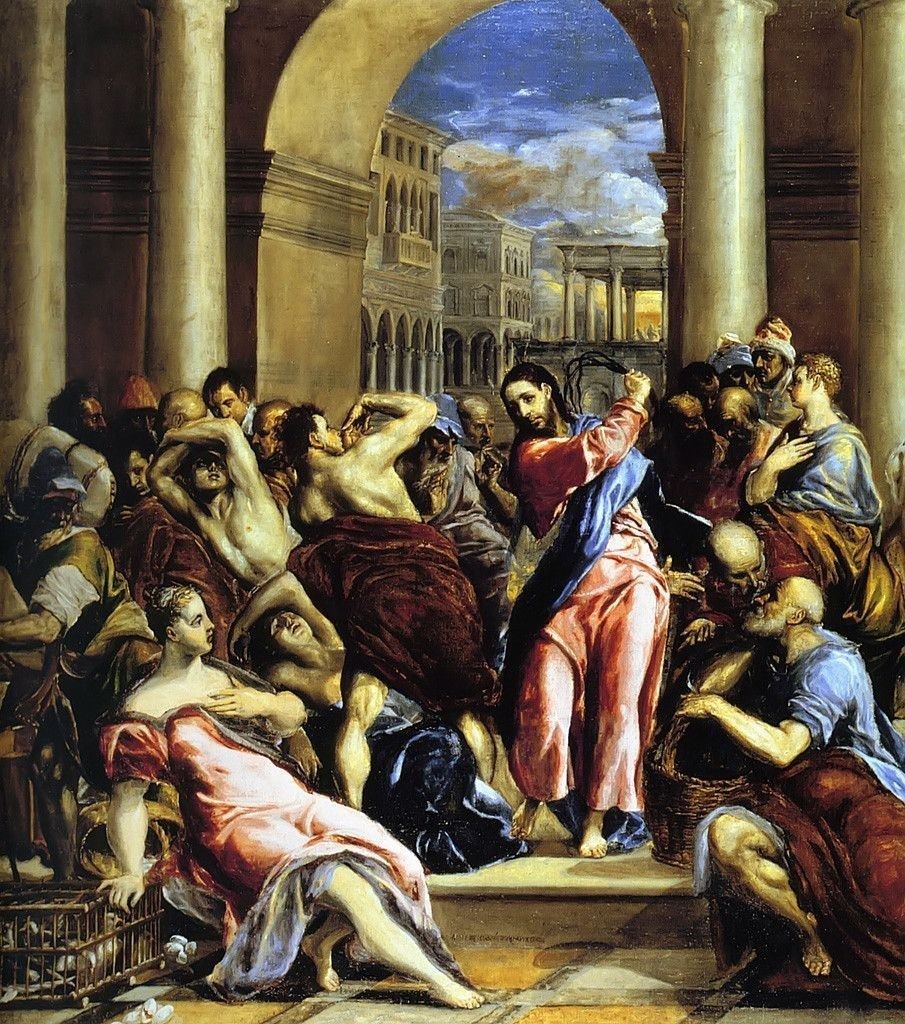

  • Christmas: Joy, Depression, and the New Creation

    Christmas: Joy, Depression, and the New Creation

    I have long understood that the Christmas season, so full of joy and hope, also so full of depression and despair, represented in our culture a sort of hope of Heaven. We speak of joy and celebrate life together and, indeed, we often experience joy during this season. We also portray a collective vision of life and relationships that is well beyond the reality most people experience, thus leading to bouts of depression over broken relationships or the pain of remembering the loved ones who have passed on and are unable to celebrate with us.

    So Christmas serves in our culture as a metaphor for Heaven, eliciting happiness or despair and most often a mix of both. For the believer, there is ultimately hope as they face the world’s brokenness and “set their hope on the grace to be given them on the day of Christ Jesus.” (1 Peter 1:13)

    What I don’t think I ever realized is just how biblical this is. As I’m going through an Advent reading plan, it suddenly struck me that the Old Testament passages we read which point us towards the coming of Jesus are inextricably mingled with prophecies of the end times. Commentaries are full of helpful explanations to guide us to understand which prophecies are talking about his birth and which are talking about his return in the last days. Of course, this wouldn’t be necessary if it were not so difficult to keep it straight in our heads as we are reading it. The coming of the Messiah, as great as it was and is, simply isn’t complete until he returns to eradicate sin and make all things new.

    Therefore, our reflection on the birth of Christ rightly produces both true joy and deep unfulfilled longing at the same time. We rejoice that the prophets were correct when speaking of the coming of Jesus. On this side of history we can celebrate the salvation that even we Gentiles experience in the here and now through the grace Jesus purchased on the cross. We also have the joy of knowing we will be with God forever on a new Earth that will be infinitely more beautiful than any Norman Rockwell or Thomas Kinkade painting would lead us to imagine. And yet this is no reason to strip away all of the experiences that fall short of the reality. On the contrary, we should embrace the imperfect visualizations of a perfect world, knowing full well that, as we wrap our arms around it, there may be thorns on the other side. As we do this, we should remember the great hope that Jesus has brought into the world and into our lives, in particular. We should also remember that our citizenship lies elsewhere, in a perfect kingdom which will be consummated only with our Lord’s return.

    Dec. 1, 2017

  • Resistance

    Resistance

    The murder of Mahsa Amini over her resistance to wearing the hijab has intensified things to a new level, but the resentment over the forced hijab in Iran isn’t new. It began as soon as the current government came into power after the 1979 revolution. Many of the protesters during the revolution just wanted freedom from the oppression of the Shah, not the religious extremism that followed. The short excerpt from Arman’s Freedom below is set in the 1980s. Zia is a fictional character, of course, but what she does in the first paragraph is not something I made up. This form of resistance was common. Keep in mind that the ‘Basij’ is what our media calls the “moral police.”

    Before stepping outside, she carefully pulled out a single strand
    of hair, as usual, and let it lie freely outside of the covering on her
    head. It wasn’t for the look, of course. She had tried pulling out a
    full tuft of hair before and was fortunate she wasn’t beaten by the
    religious police, the Basij, who increasingly dominated the everyday lives of Iranians. No, it wasn’t for appearances. She pulled out the single hair for her sanity. It was one of a thousand ways she found to silently remind herself she was resisting. While all appearances pointed to defeat, she let an invisible sliver of hope blow freely around her face as she defiantly walked past the men in uniform.

    Black clothing dominated the streets, especially among the
    women. The birds of spring mocked her as she tried to envision the colors underneath the other women’s chadors. She imagined a sudden burst of wind yanking them all off, revealing a mosaic of
    bright pastels underneath joyful faces. What she would give to have the power of that wind!

    The excerpt below is a summary of the 2009 elections and the protests that followed. It’s the actual history that informs the background of my fictional characters. What’s happening today reminds me of the murder of Neda Agha-Soltan.

    Hopes were high leading up to the election. The promises of
    Ahmadinejad had failed miserably, destroying an already fragile
    economy and leaving them under the thumb of a resurgent and
    oppressive Islamic government. Mousavi, however, represented a
    more progressive agenda and the people, yet again, had a faint taste of freedom. Polls leading up to the election showed him as the clear favorite in the four person race. The energy surrounding his rallies seemed to validate him as the one to beat. But the day of June 12, 2009, didn’t go the way they had hoped. It went exactly how they feared.

    The first concerns were raise when a state-run media outlet
    declared Ahmadinejad the victor three hours before the polls closed. It only got weirder and more brazen from there. Reports spread like wildfire through Twitter and Facebook, much of the information coming from Iranians outside of the country who had access to unfiltered news, about polling stations closing early even though long lines of people still waited to vote. Other stations ran out of ballots with no apparent effort to re-supply them. Three hours after the election, hardly enough time to count the tens of millions of paper ballots cast, the government announced that Ahmadinejad had won by twenty million votes. In spite of the great momentum carried by Mousavi, Ahmadinejad won the the four way race by a two to one margin – the one representing the three of the other candidates. The official percentage of his vote was 62.63, a number that was suspiciously repeated in individual areas throughout the nation. Even in the opposing candidates’ hometowns, Ahmadinejad claimed 62.63 percent of the votes. In other words, it seemed like they weren’t even trying to hide their cheating.

    As many as two million protesters flooded cities throughout the
    country, their individual shirts, hijabs, and chadors like scales of a
    green dragon surging through the awakened streets. They screamed for a recount, cursed Ahmadinejad and the Ayatollah Khameini, and held signs reading, “Death to the Dictator!” In some places, tempers boiled over into acts of violence. It was open rebellion on a scale unseen since the Revolution. On the surface, it seemed as if the government had miscalculated their actions. In the end, however, they showed that this was probably not the case. Instead, it seemed that they actually invited the anger, drawing out their detractors in a way that would allow them to unleash their own.

    The blowback to the protests was brutal. Basij forces were
    unleashed like demons out of dark crevices of the earth. They fired guns into crowds. They threw tear gas indiscriminately. They beat them with rods, both men and women alike. They spit on them, cursed them, and relished in the pain of the rebellious crowds. The most notorious of the atrocities occurred when Basij forces shot Neda Agha-Soltan in the chest as she was walking back to her car. Her last breaths were captured on video and uploaded to the
    internet, spreading like wildfire among Iranians, both inside and outside of the country, and proceeded from there to capture the attention of the entire world. It galvanized the Green Movement and increased the fervor of the protestors, but to no avail. The Basij furthered their crimes on the people by what they did with the prisoners they rounded up. The infamous Evin Prison was again full and the ensuing weeks and months would reveal credible reports of torture, rape, and murder.

  • Man on the Moon

    Man on the Moon

    What would you do if the political movement you are supportive of suddenly insists that they saw their leader’s face on the moon? And what if questioning it meant that you suddenly weren’t a “true believer?” In Tehran Blues, Kaveh Basmenji talks about an incident that happened during the Iranian Revolution.

    ‘How could you not see that? Everybody saw his face on the moon last night!’ In the summer of 1978, as a seventeen-year-old high-school boy, my jaw dropped to hear this remark from a classmate who excelled in all the empirical sciences. He was talking about seeing on the moon the portrait of Ayatollah Ruhollah Khomeini, the shah’s arch enemy, and a man who would shortly become the omnipotent leader of an Islamic Revolution that rocked Iran and the whole world, and laid the foundations of the first religious state in ages. To the present day, Iranian intellectuals still blame each other for having ‘fallen in such a trap’. In those days, however, anyone who openly doubted having seen the great man’s portrait on the moon would be at the receiving end of derisive looks and sarcastic remarks.

    A few years ago I mentioned this story to a guest speaker at Beeson Divinity School who is an Iranian Christian. I’ll never forget that he said, “I remember being a kid and believing that I saw it!”

    To be fair, Khomeini eventually denied it and the revolution would have happened without it, but it’s still worth reflection. It would be easy to say, “I can’t believe how stupid they were!” But I believe this response is naive. The Shah had devolved from a leader who modernised the country into a despot who used a system of secret police to terrify the country. When people are desperate and someone arrives on the scene who they believe is the answer, there’s not much limit to what we are often willing to believe.

    As I was researching Iranian history for Arman’s Freedom, I couldn’t help but wonder, “What was it like for those who wanted Khomeini to overthrow the Shah, but were skeptical of the claim about his face on the moon?” After all, if they doubted it, they were deemed as an “unbeliever.” The short teaser below is from a chapter entitled, “Man on the Moon.”

    Just outside of my office with the Samford band in the background